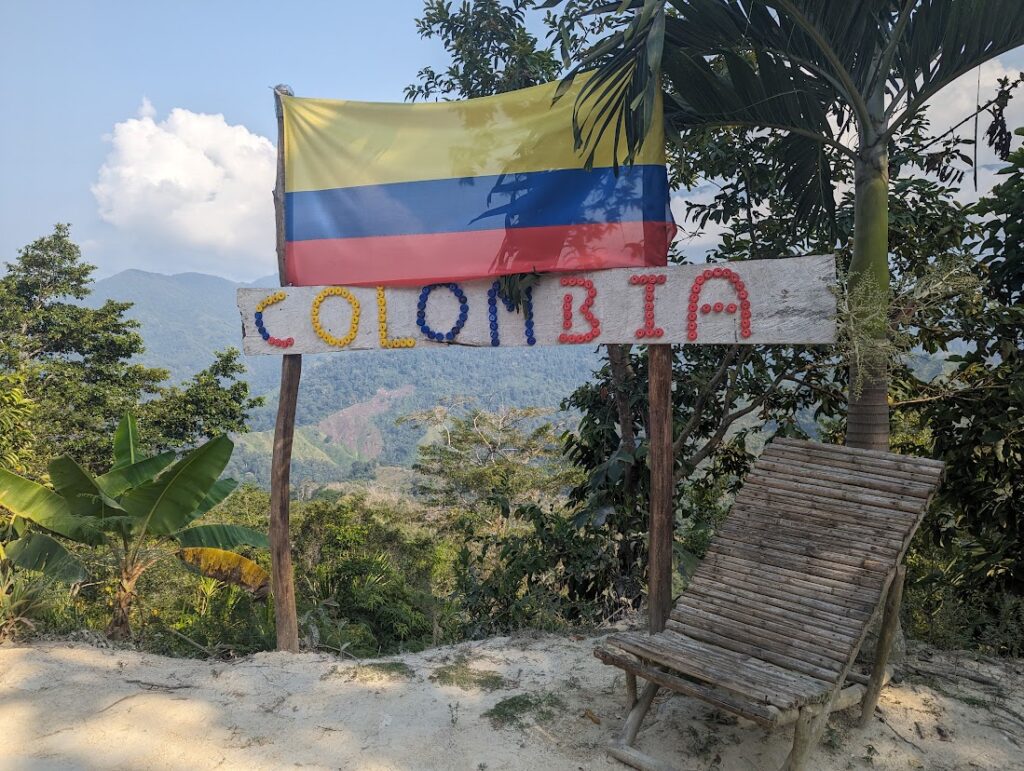
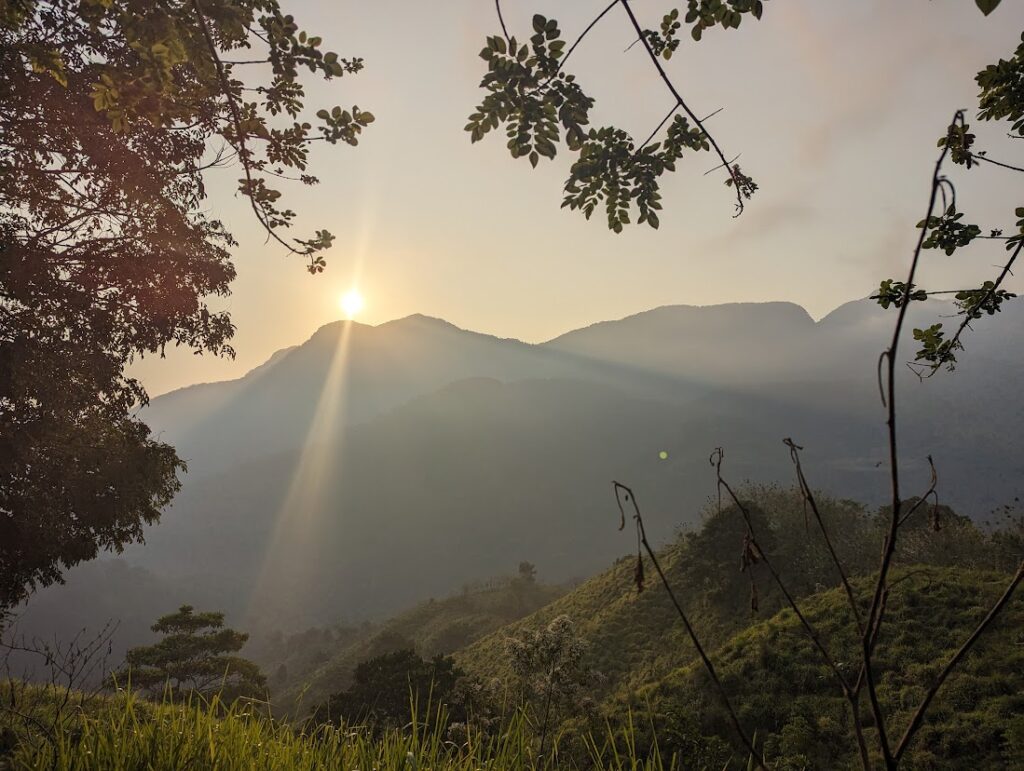
Santa Marta, Lost City Trek & Minca
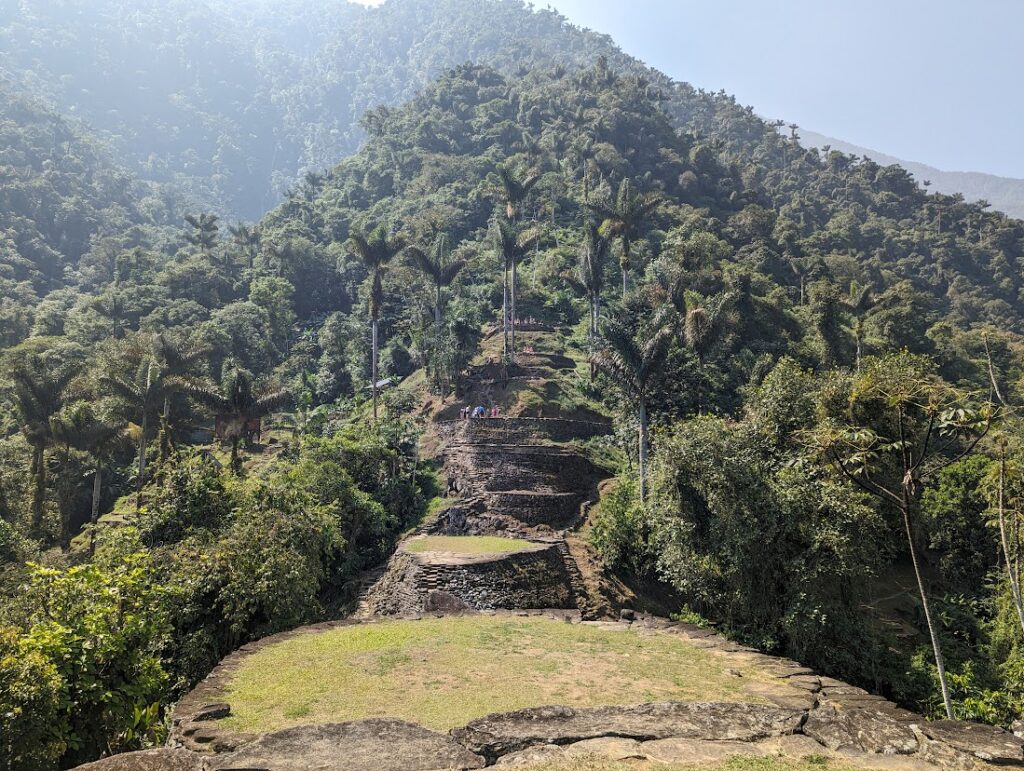
“It’ll be fun” they said. And that’s how my friends got me to join them on the Lost City trek, a 4 day hike through the Sierra Nevada jungle to reach an ancient archaeological site. I love hikes, but usually day hikes with nice scenic views...not a multi day hike, sleeping outdoors in the jungle. But I thought it would be something different, and decided to take on the challenge.

I flew into Santa Marta, the pick up point for the trek. On arrival, watching an empty carousel going round, I realised my luggage was missing. This was a small local airport where the staff didn't speak any English, but after a brief conversation (mostly using Google translate), they confirmed my luggage was lost. Not delayed - lost. The panic set in, realising that, other than a few items, all of my belongings were  missing and I was about to go on a hike. Thankfully, I had worn my hiking boots on the flight, and had a few essentials in my hand luggage, but nonetheless felt upset, more at the thought of potentially never locating all of my personal belongings. If my friends hadn’t been there, I’m fairly certain I would’ve bailed and booked a flight home.

To top it, off, I somehow managed to trip over, not once, not twice but three times between London and the start of the hike! Realising after the 3rd fall that my laces from one shoe, kept getting caught on the hook of the other boot, something that my friends were very amused by and actually turned the bad start into a moment of laughter!

So, with minimal prep and a slightly chaotic start, we set off on the trek.

Lost City Trek

We booked our trek with Wiwa tours, selecting the 4 day (3 night) Lost City Trek. There are other options to do over 3 days or 5/6 day options too. The total distance of the hike is 60km which was split over 4 days and I would describe it as a fairly difficult hike with some very steep parts so I would say you need to have fairly good fitness levels.

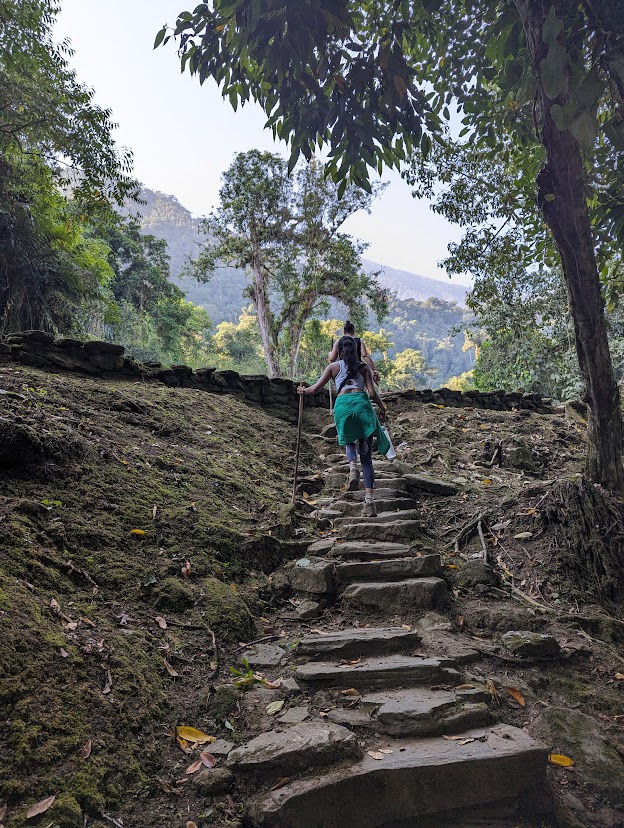
I'll do a separate post with a breakdown of the trek in more detail but in summary expect long days of hiking in intense heat, often with very little shade (which may or may not have resulted in a few tears). There are some very steep parts with never ending steps,  my personal favourite was the section called 'Happy Hour' which sadly wasn't 2 for 1 cocktails, but an intense uphill ascent.

You could generally go at your own pace and the guides would split themselves up between the group so there was no pressure to keep up with the fast hikers, However everyone still needed to reach the designated camps each evening.
One member of our group found the trek particularly tough and was transported by donkey for part of the route, which is reassuring to know if you need a backup plan.

Night times were comfier than I expected, although that may have been helped by how tired we were. Each campsite had showers and beds with mosquito nets. The sleeping areas were open-sided, with only a roof overhead, meaning you were very much immersed in the surrounding jungle. This brought plenty of encounters with frogs, insects and, on our final morning, a truly gigantic spider (possibly a tarantula). As soon as I saw it crawling up the netting of my friends bed, the fear kicked in, I've never felt my heart racing so fast. My friend sat helplessly on her bed watching from the inside, whilst the rest of us screamed and a guide rushed over to help. Thankfully this happened on the last day, because if we'd spotted it earlier in the trek, I may well have called it quits or spent the remaining nights awake terrified.

Food throughout the trek was excellent. The guides prepared breakfast, lunch, and dinner each day, along with regular snacks to keep our energy levels up on the trail. Mealtimes were time for everyone to swap stories from the day, compare aching muscles, and enjoy a well-earned meal before doing it all again the next morning.

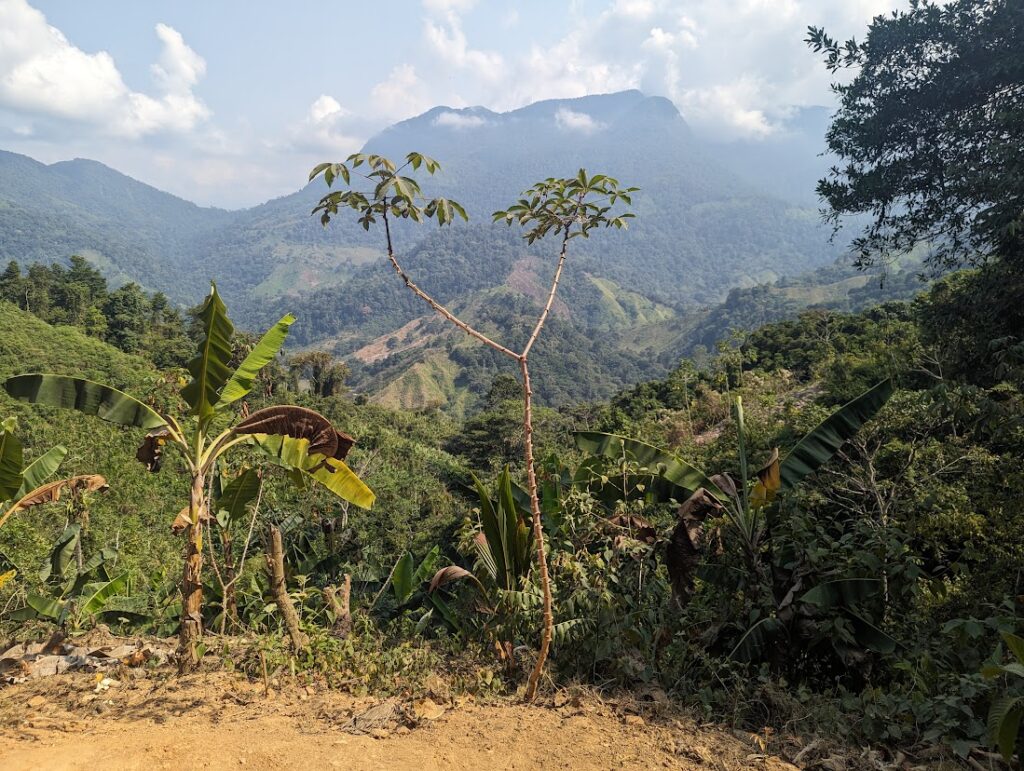
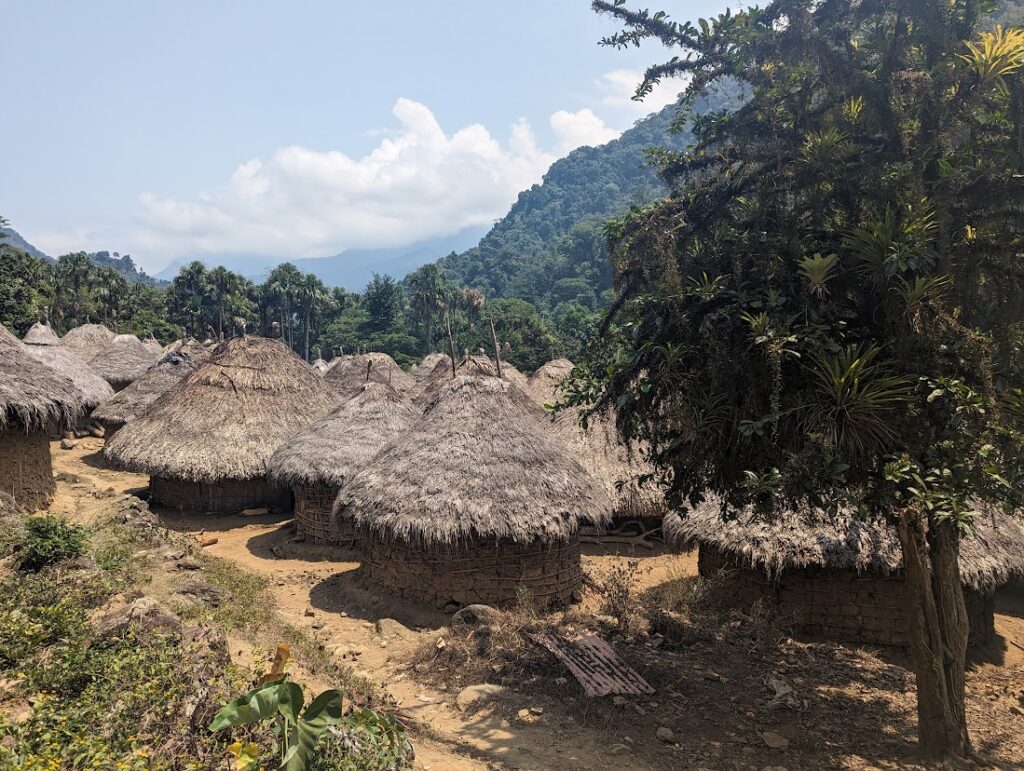
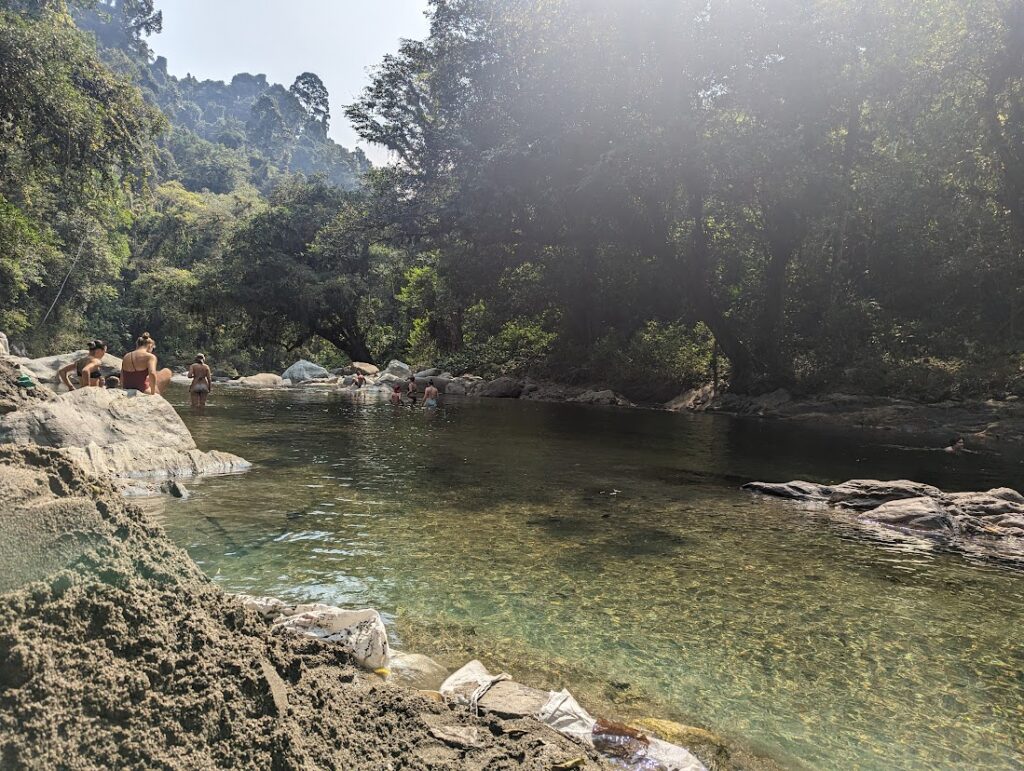
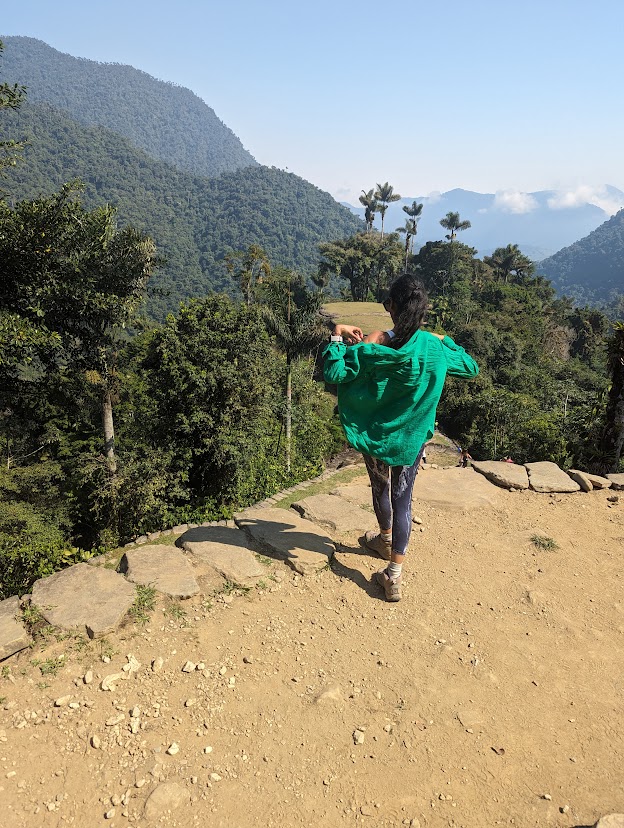
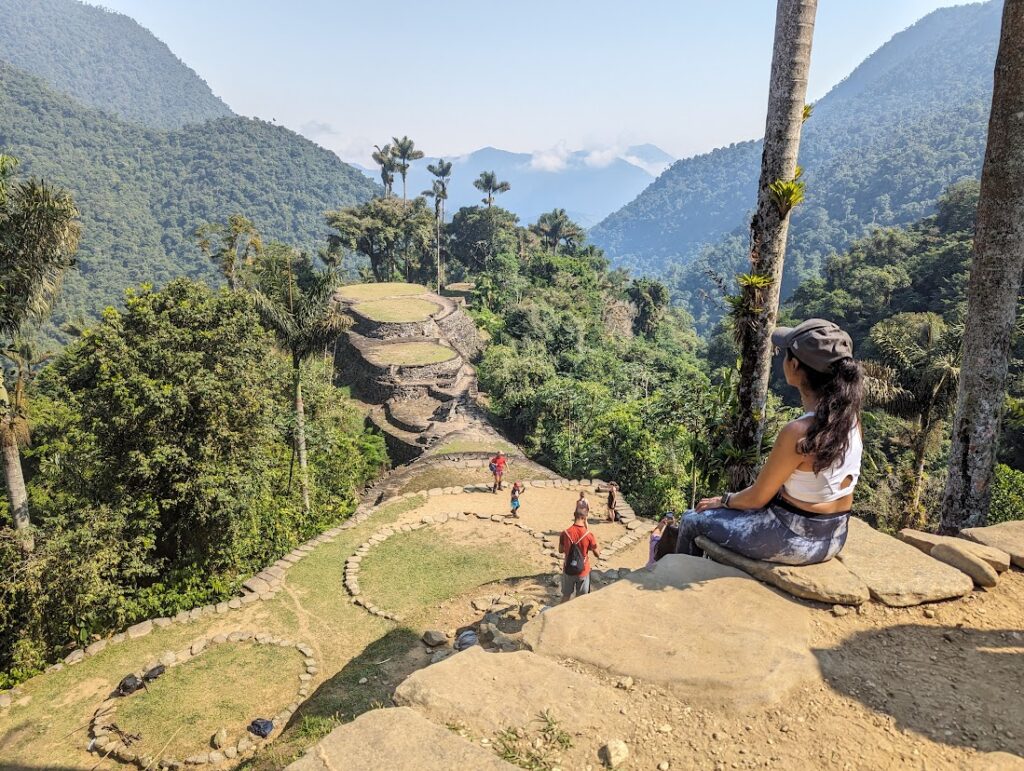
Overall it was a very rewarding hike and interesting to learn about the Indigenous communities that lived in the 'Lost City' through our guides. Although the final destination is impressive, it's the trail itself that defines the experience, passing through some incredible viewpoints and meeting fellow trekkers and sharing stories.
Minca

Arriving back in Santa Marta from the trek, fully depleted, we decided to head to Minca for a quick recovery pitstop before heading on to Cartagena. We took a taxi which took about 35/40 minutes but there are buses that go from Santa Marta to Minca too.

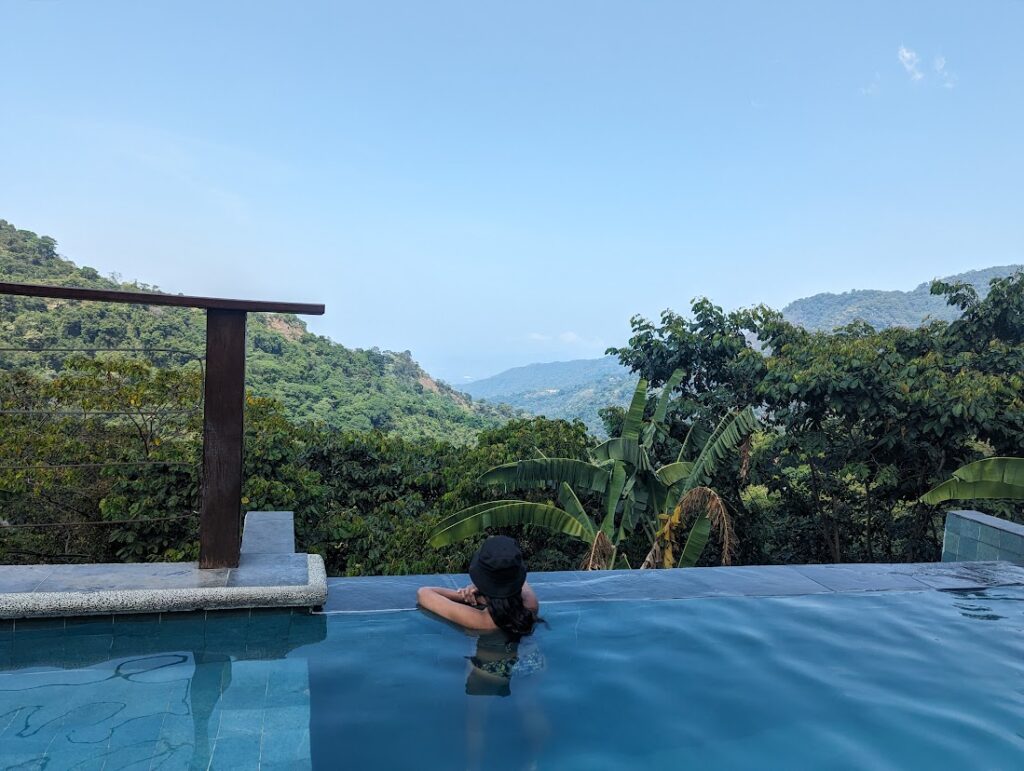
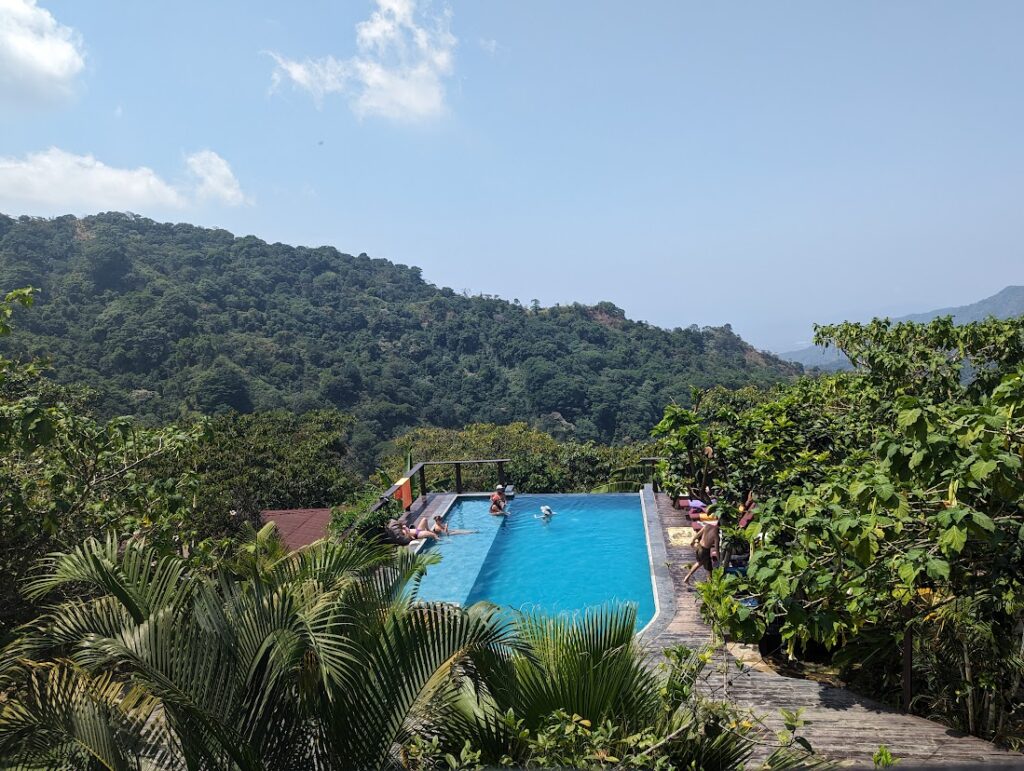
Minca was the perfect day of respite that we needed. In fact, I had a list of things I wanted to do with our day and half there (such as spotting all the tropical birds, visiting a cacao farm and visiting Pozo Azul waterfall), but feeling as tired as I was, I decided to take it easy and just rest by the infinity pool. Once upon a time, I would have tried to squeeze it all in, but as I get older, I value rest time just as much.

We stayed at Masaya Casas Viejas hotel, which has an infinity pool, a lovely restaurant and deck overlooking the pool and surroundings and they offer massages, which after a multi day hike,  might be what you're after.
Cartagena
After the calm nature of Minca, Cartagena felt like the complete opposite, louder, brighter and much more touristy. We hired a driver to take us from Minca to Cartagena as it was the most convenient way to get there in 1 day, taking about 5-6 hours. The taxi driver was very friendly and it was also the moment I realised that Spanish in Colombia is so much easier to understand than other parts of the world. Slower and clearer, good for someone like me, and I felt like my Spanish lessons at school finally paid off (un poco).

My first day, in Cartagena was a bit wasteful but necessary. With my suitcase still nowhere to be found, we headed straight to a shopping mall so I could add a few additions to my wardrobe and didn't need to look like I was on a permanent hike for the rest of the trip.
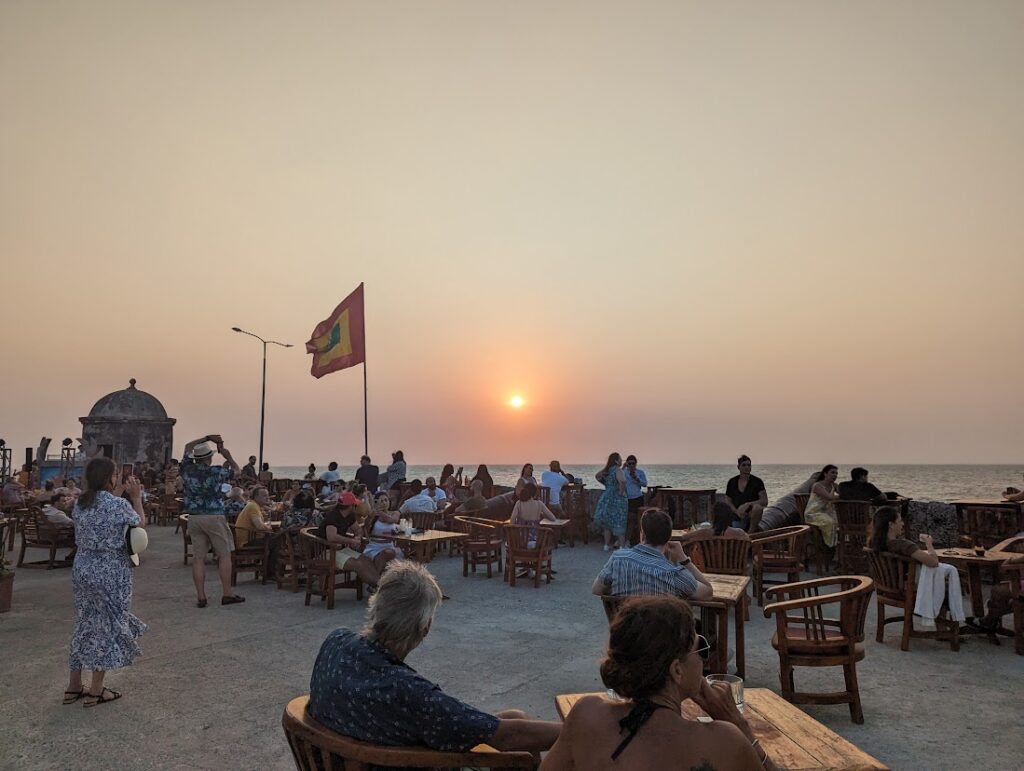
The first evening, things finally started to feel a bit more relaxed. We headed to the famous Cafe del Mar known for its sunset views and the old cannons. Nothing beats people watching whilst the sun is setting with a drink in hand.
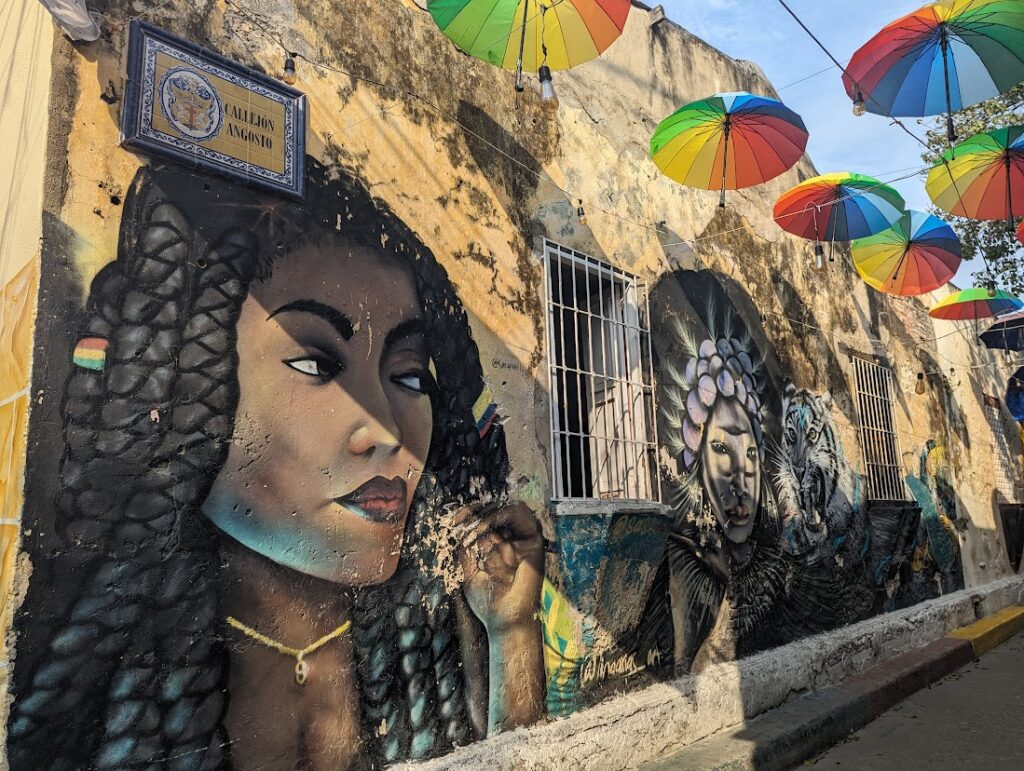
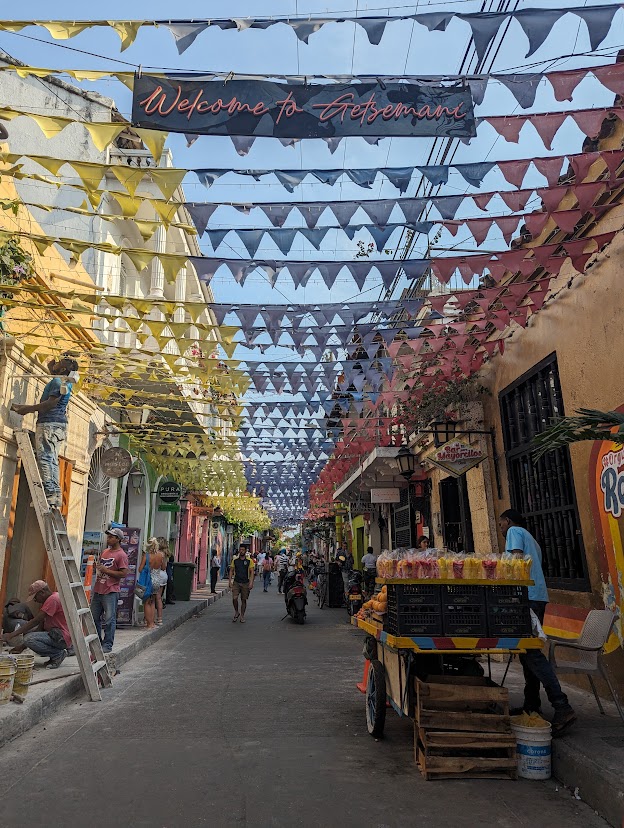
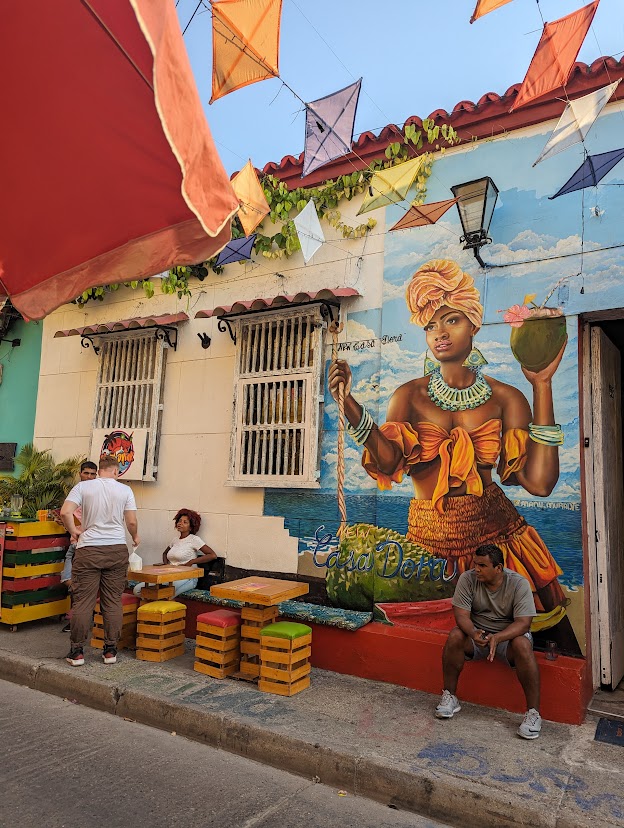
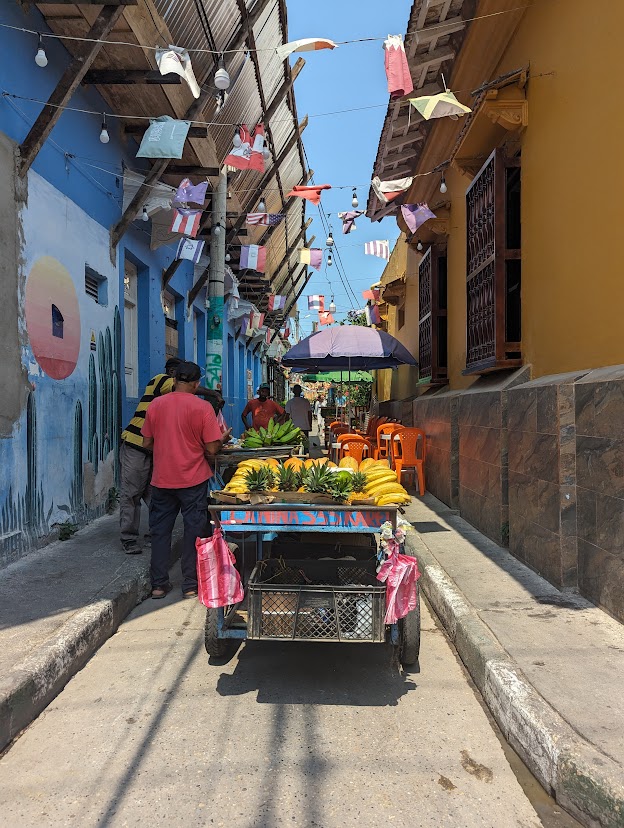
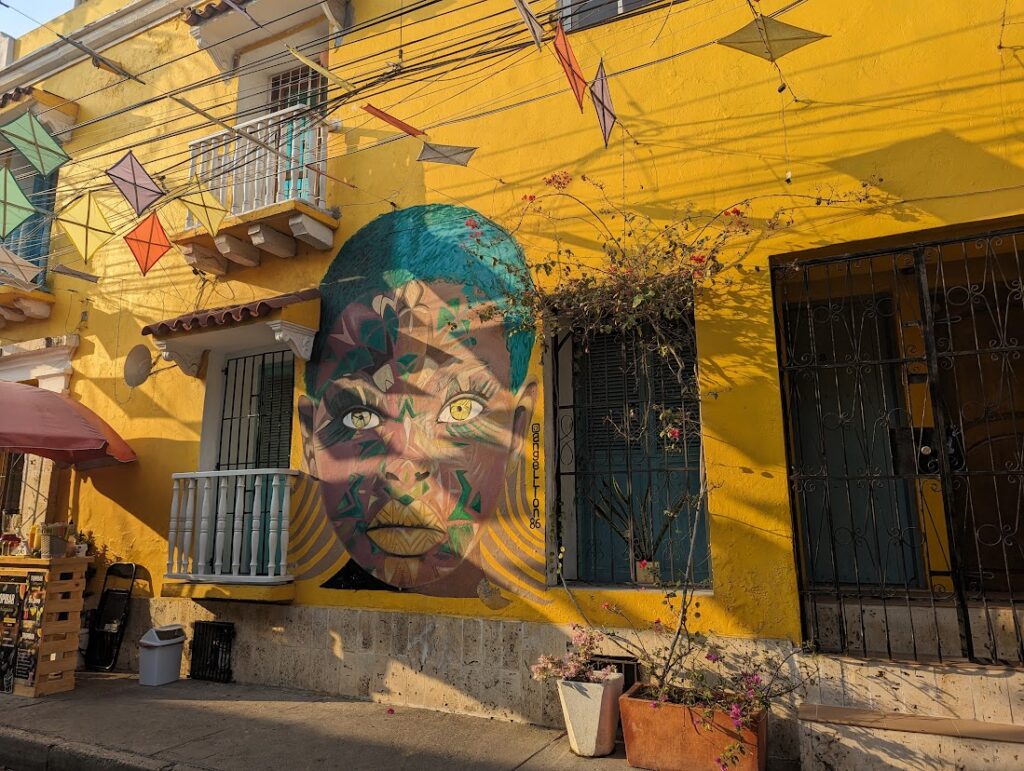
I didn't have a set itinerary for Cartagena, most of it is about wandering through the streets, admiring the vast amount of colourful buildings and street art, particularly around the Getsemani area.

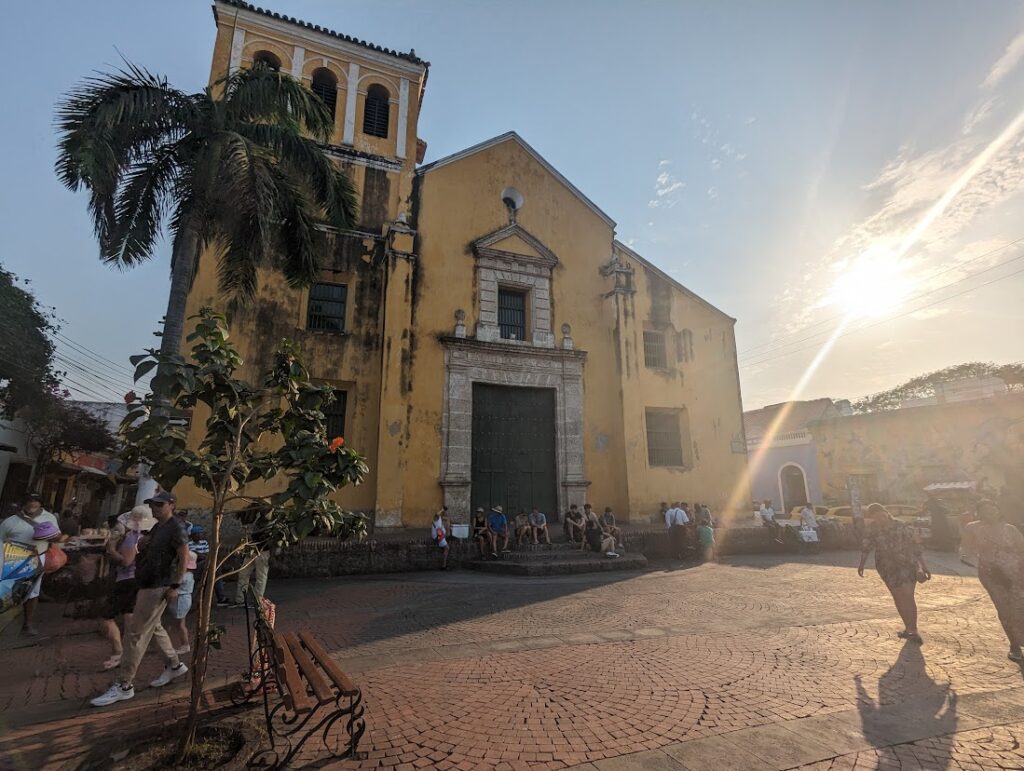
At night, the atmosphere really comes alive. There was a live band playing out on the streets and dancers by Plaza Bolivar, with people gathering around, dancing, and hopping between the many bars and restaurants nearby. One of my favourite spots was the beautiful square dominated by the yellow cathedral, where women dressed in traditional colourful dresses sat nearby, adding to the colourful surroundings.
Isla Tintipan
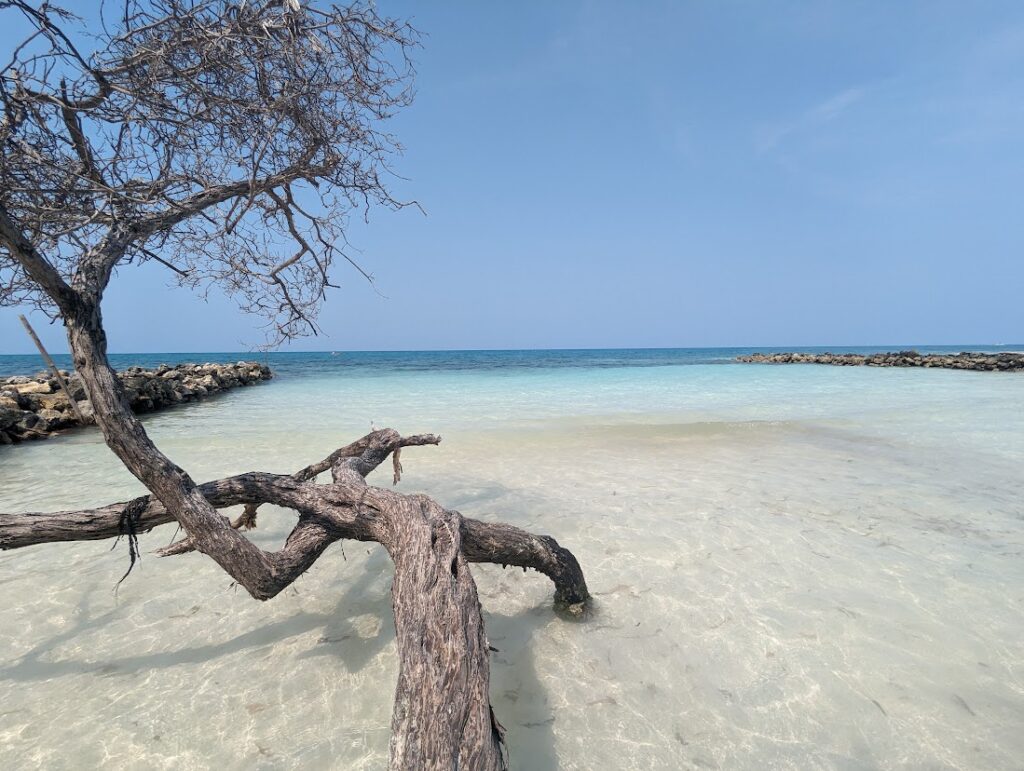
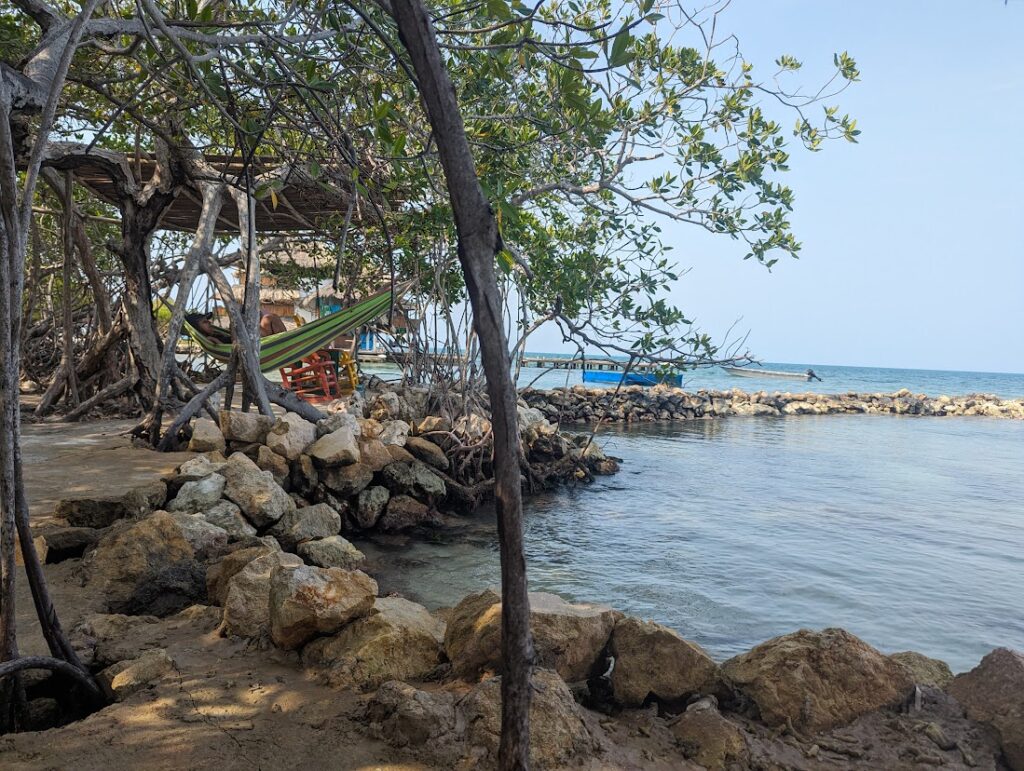
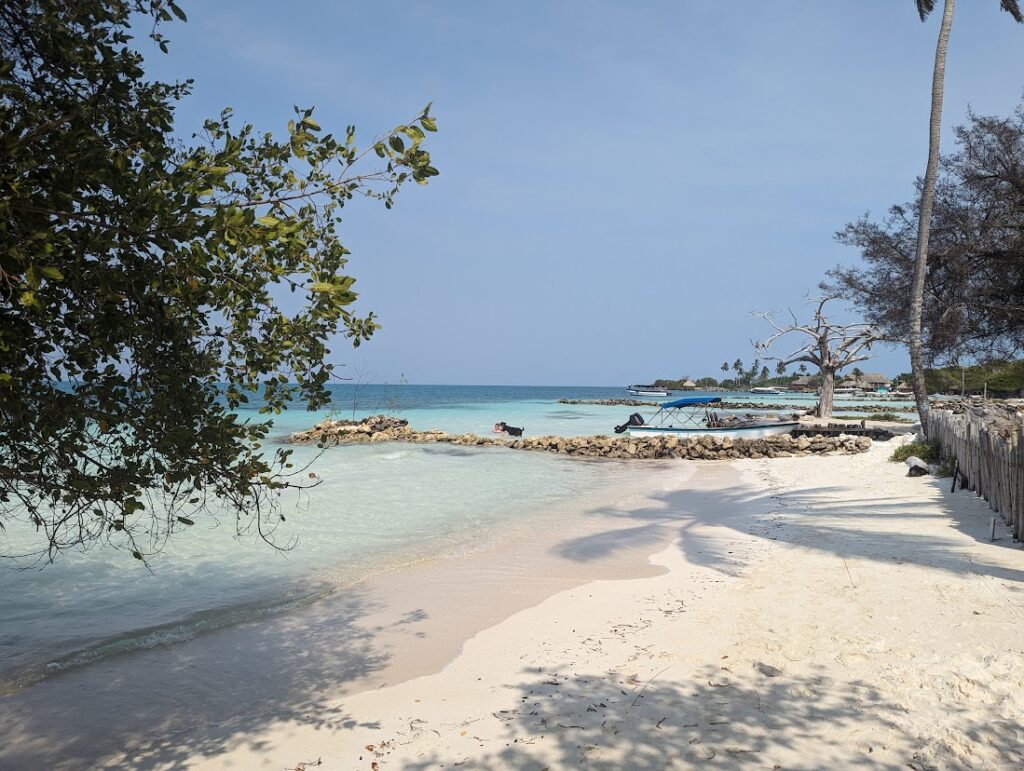
During our stay in Cartagena, we took a boat out to Isla Tintipan for a night. There are dozens of islands off Cartagena including some of the more popular islands such as Cholon known for the partying and Isla Grande. However, we were looking something more tranquil and rustic. Isla Tintipan is exactly this; quiet, simple, and wasn't too difficult to get to by boat. We chose to stay at a small, family-run spot called Eco Hotel Puntanorte surrounded by nothing but water and sand.

This is the kind of place where time slows right down with very little on the “to do” list. There are little hammocks and tucked-away chillout spots dotted around the hotel, perfect for reading, napping, or just staring out into the ocean. We did hire a kayak in the afternoon and paddled as far we could before our arms gave way (my friend clearly hadn't done her upper body strengthening), taking in just how small and peaceful it really is.
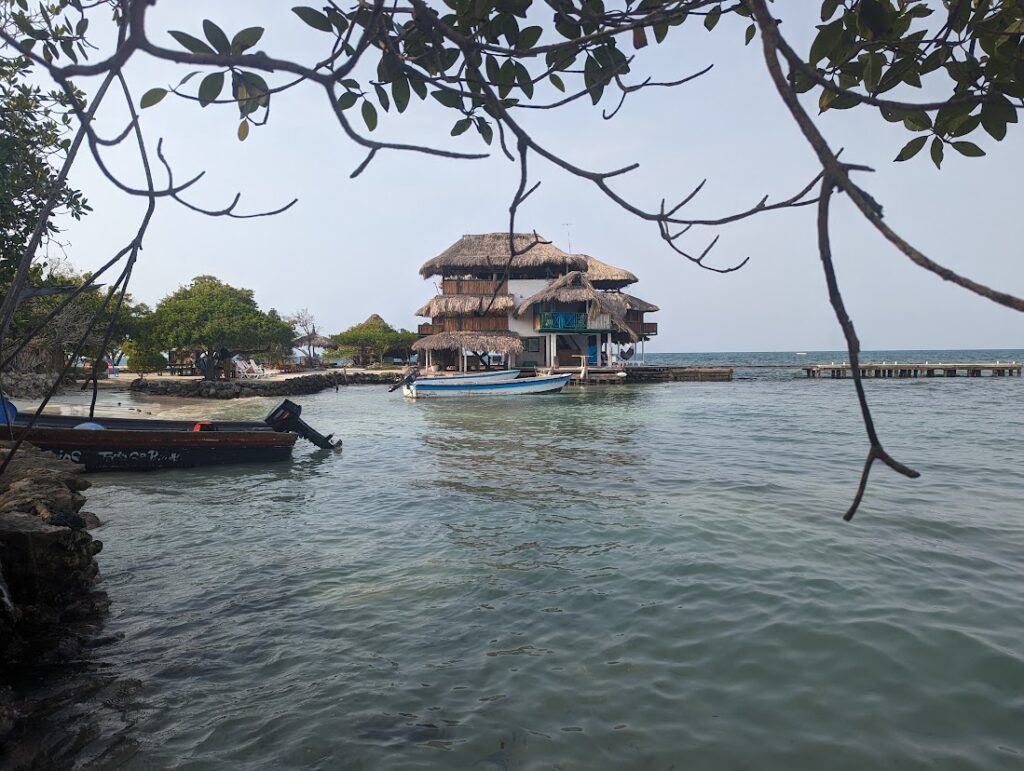
The rooms at Hotel Puntanorte are very basic. No locks, or lighting, minimal furnishings, but you honestly don't need it. Its a family run small hotel with a natural sense of ease. That said, rustic island life definitely comes with its quirks. At night, the sound of the waves were so loud it felt slightly eerie, like my room had been washed ashore. And nature didn't entirely stay outside, I had a crab casually making its way up my wall at one point. But after my earlier jungle experience, this didn't terrify me half as much.

The food was a real highlight. Fresh, simple, and some of the best prawns I’ve had, along with some delicious pina coladas. I sometimes still dream about them a few years on. Evenings here are very low key, there is literally nowhere to walk to, so you have to stay in the hotel and lights go out early, around 8/8.30pm. So after dinner and several competitive rounds of UNO, we called it a night.

Getting to the Island

We used a boat company called TranqItEasy to get to the island, who run transfers from Cartagena to the island daily. It took around 2 hours and dropped us off right at the hotel. Limited luggage is allowed on these boats so we had to take small bags, which was fine for me...considering I didn't have any luggage.

In a slightly on brand moment for this trip, I managed to leave my bank cards behind at the hotel (in my defence the rooms were dark so I hadn't spotted them falling out). I didn’t even realise until I was back in Cartagena. Again in a state of panic not being able to pay for my next accommodation, I contacted the hotel owner who was so lovely and honest, confirming he found my cards. Not having enough time to get back to collect the cards and get back again before having to fly out of Cartagena (as boats only ran a few times a day), TranqItEasy went out of their way to collect them and bring them back to Cartagena for me. I was incredibly grateful.
Medellin
Our next stop was Medellin, and I wasn’t entirely sure what to expect. If I’m honest, I felt a bit apprehensive about how safe it would feel heading to one of Colombia biggest cities, having heard mixed reviews about the place and potential crime levels. However, it was surprisingly safe and as long as you don't venture out of the main areas you should be fine.

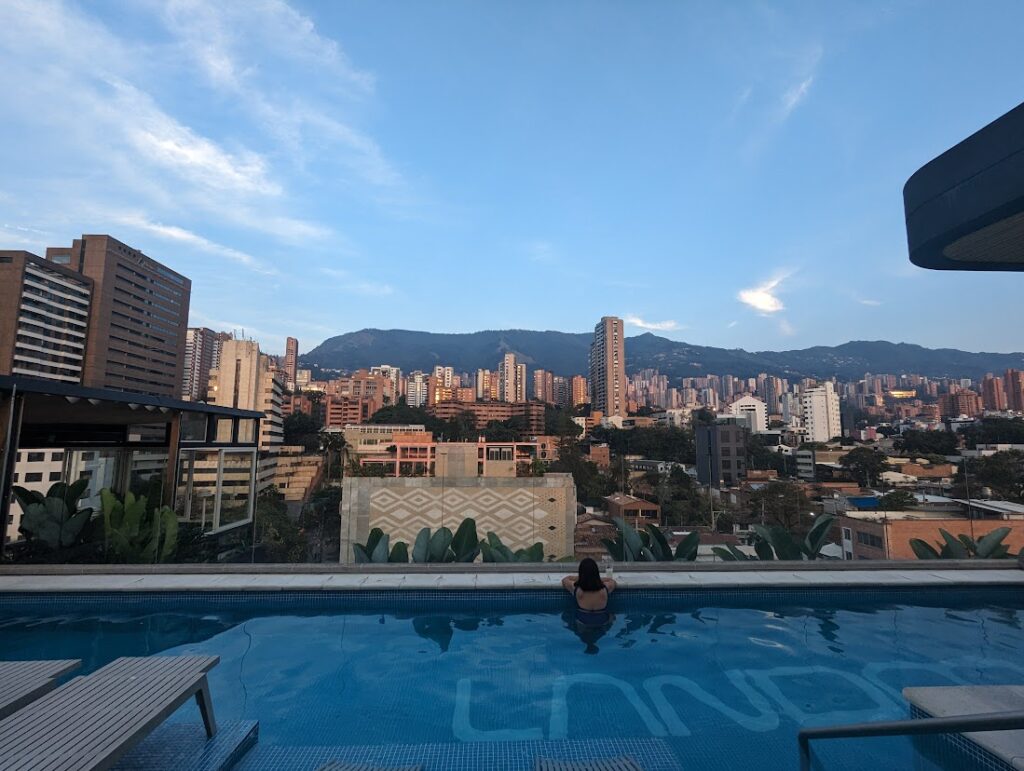
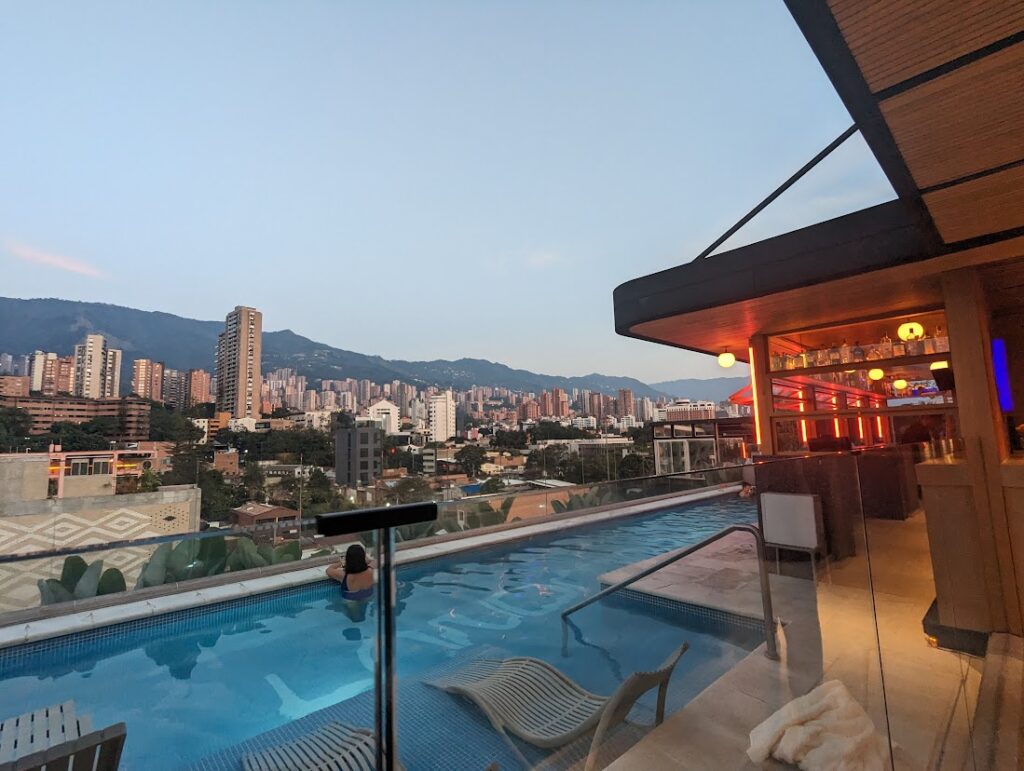
We stayed at the Landmark hotel, set in a modern upscale part of Medellin (El Poblado), with lots of cafes and restaurants within walking distance. After a mix of sleeping in the wild and sharing basic rooms, we decided to treat ourselves to a nicer hotel and actually the cost between 3 of us wasn't too bad. The hotel had a rooftop pool and jacuzzi, overlooking the city, which was a perfect way to destress and relax.
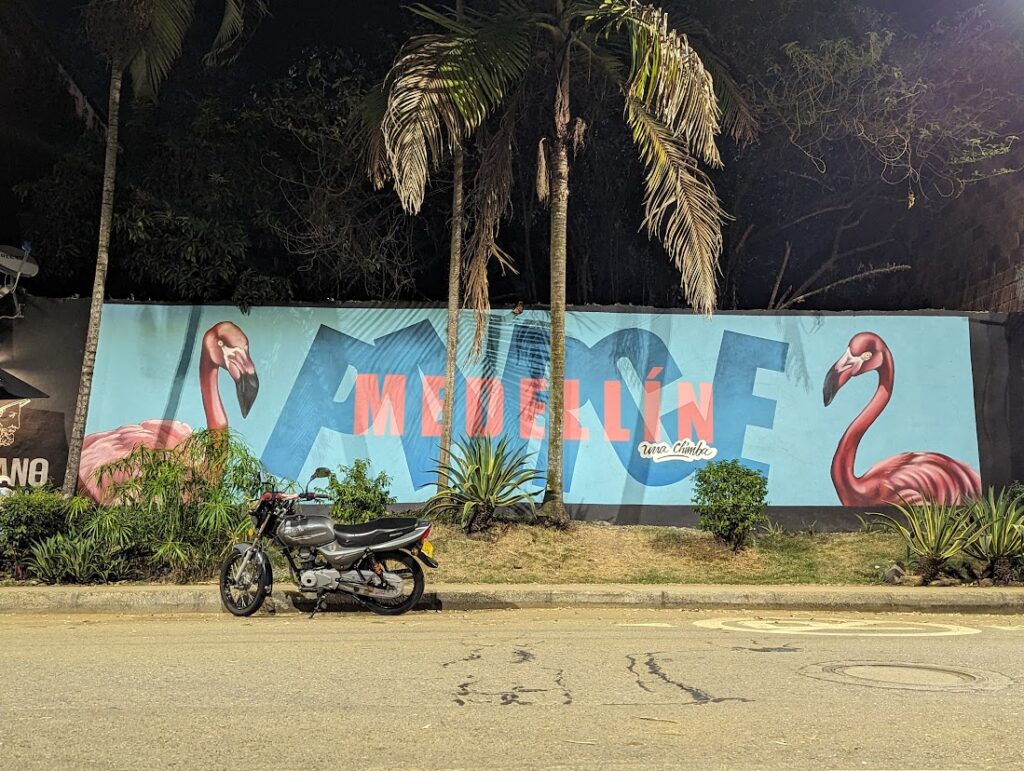
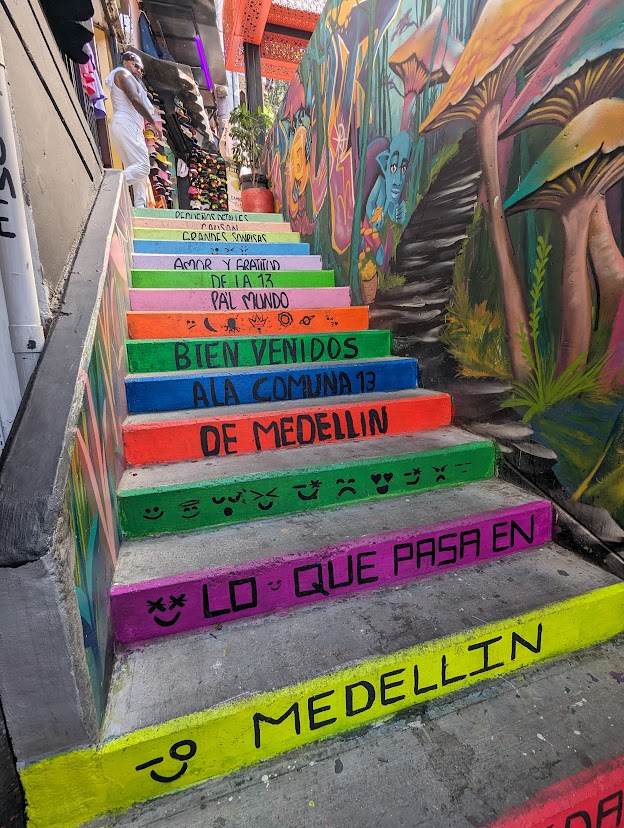
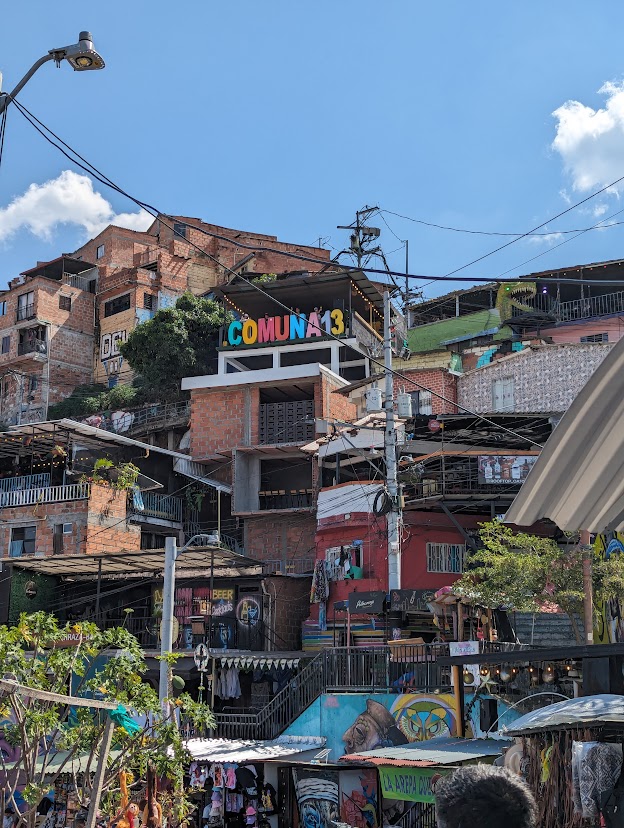
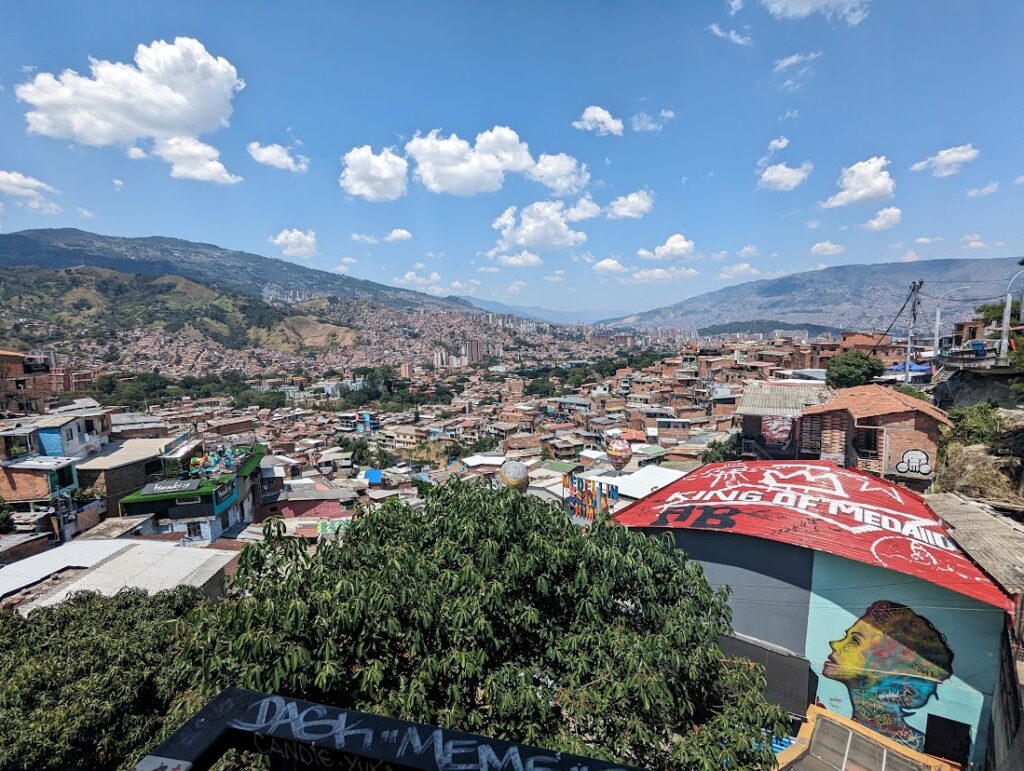
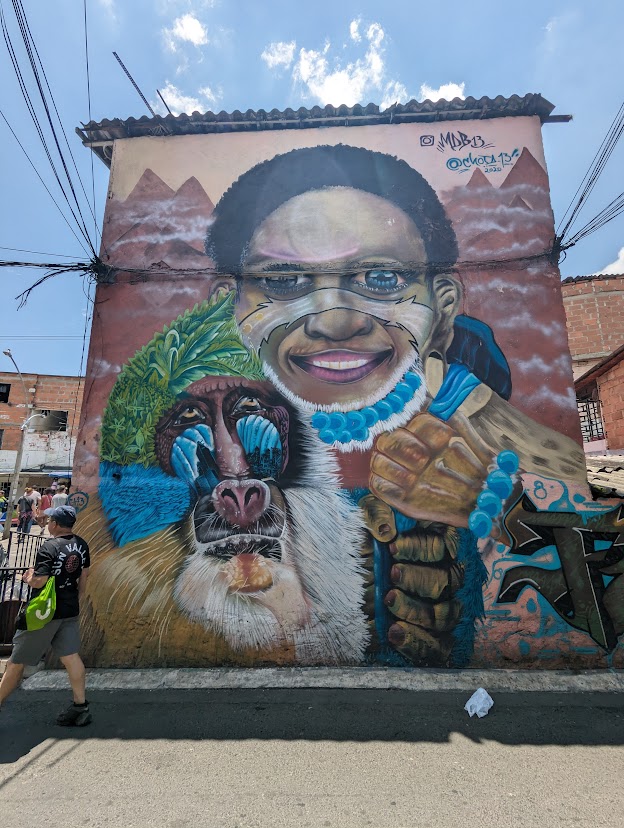
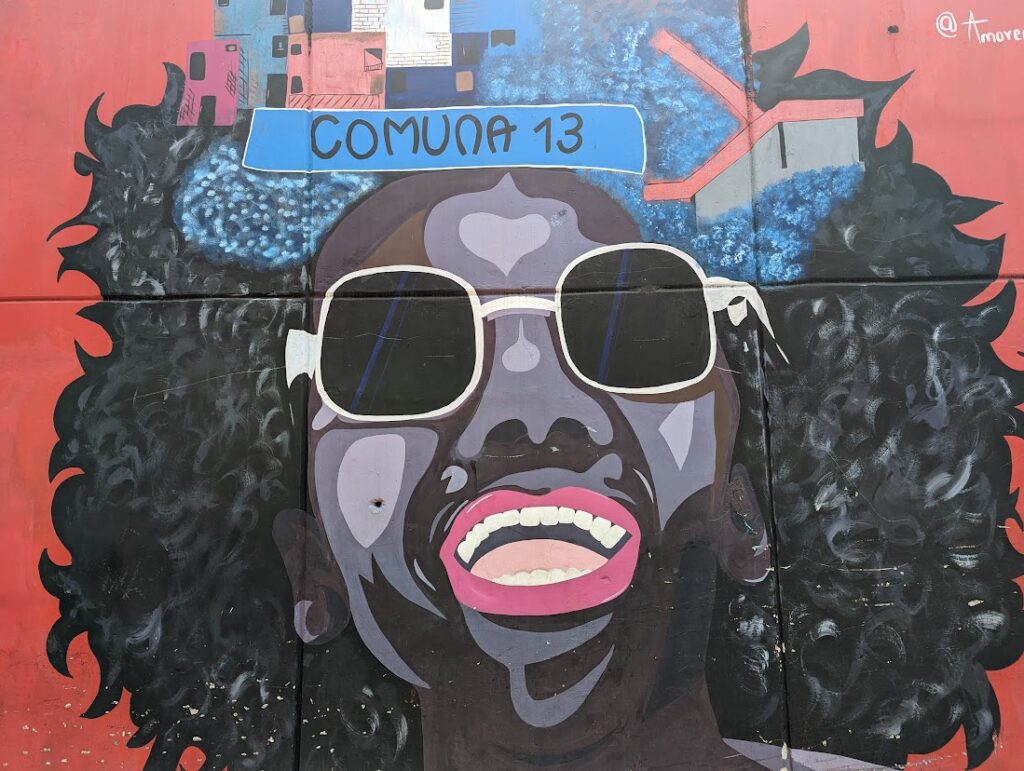
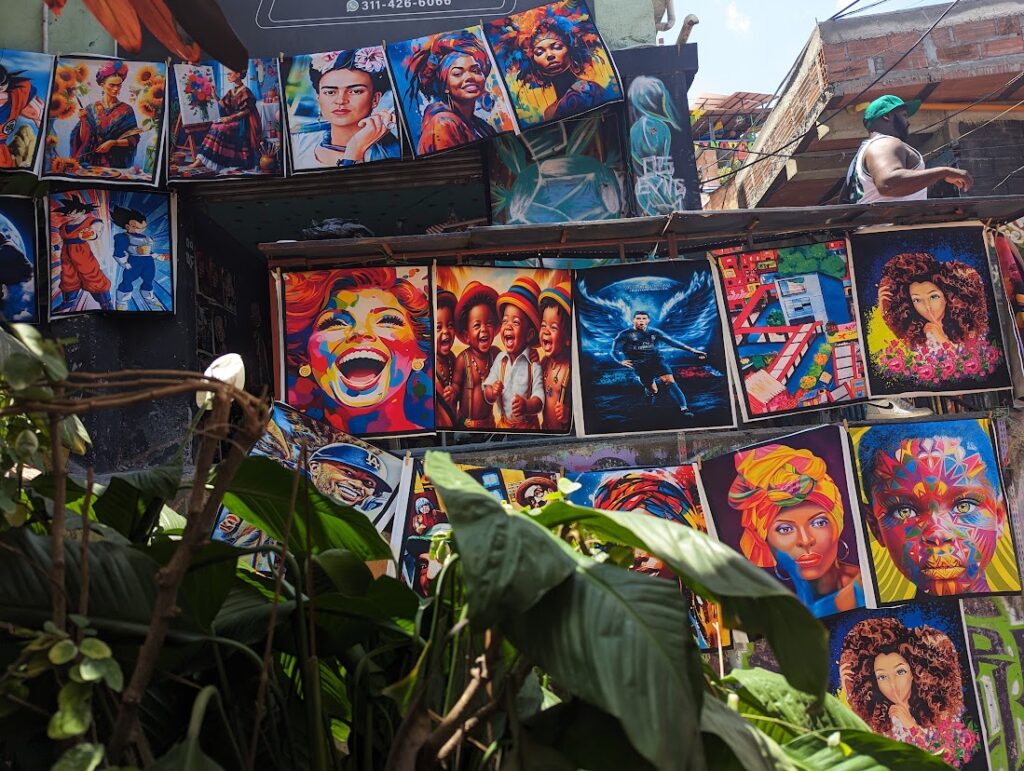
The main highlight for us was the Comuna 13 tour. Once considered one of the most dangerous neighbourhoods in the world, Comuna 13 has undergone an incredible transformation. Today, it’s known for its vibrant street art, outdoor escalators built into the hillside, and powerful stories of resilience and change. Walking through with a local guide gave great context, you hear about the history, the challenges the community faced, and how art and tourism have played a role in reshaping the area. I was so impressed hearing how the people have not only changed things around but how all of the children are able to go to school.

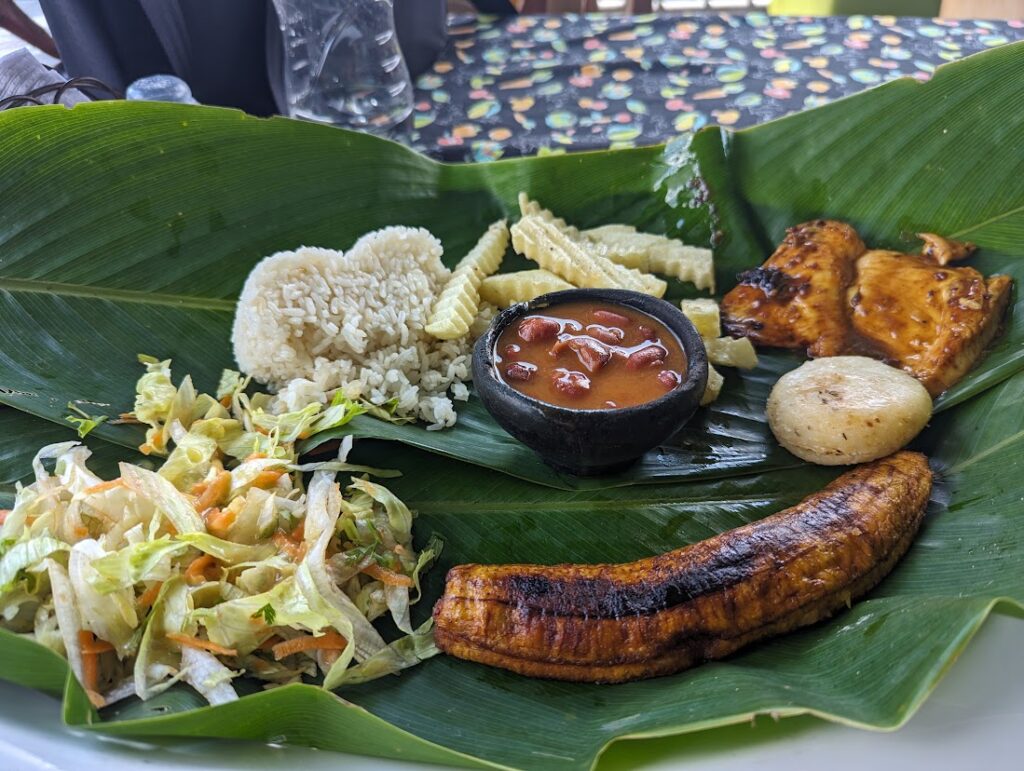
We booked the Comuna 13 tour with Zippy Tours, where a local who grew up in the area took us around, giving the tour more real history and context hearing his personal stories. We learned about the past and evolution of Comuna 13 and it was incredible hearing how far the area has developed. With lots of graffiti, street art, the famous escalators in the middle and panoramic viewpoints, this is not one to miss! It was around a 1/2 day in total with time at the end to stick around and explore. Although the guides may mention Escobar, generally it's not a part of the history they want to remember and talk about so be mindful when visiting. We grabbed lunch at the end of the tour and had a tasty local dish of chicken, rice, beans and plantain served on a banana leaf.
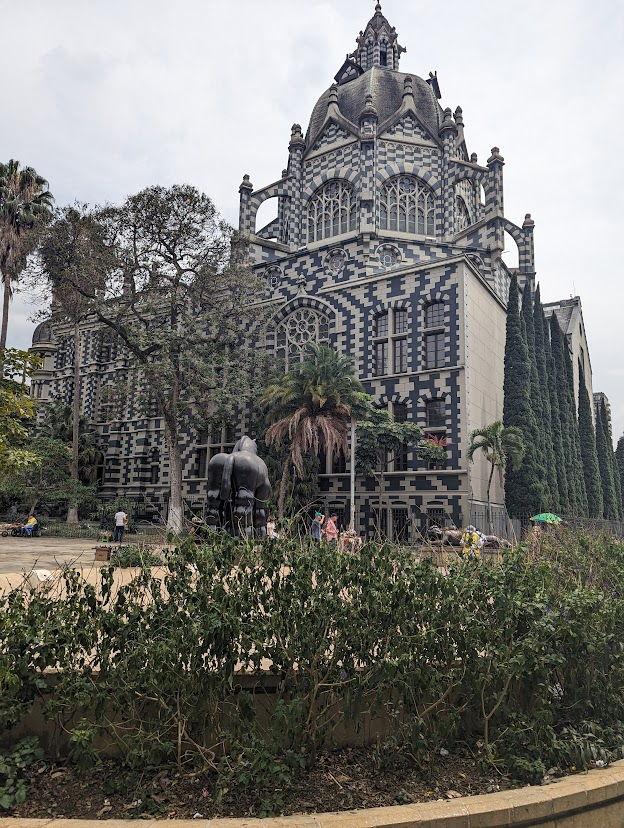
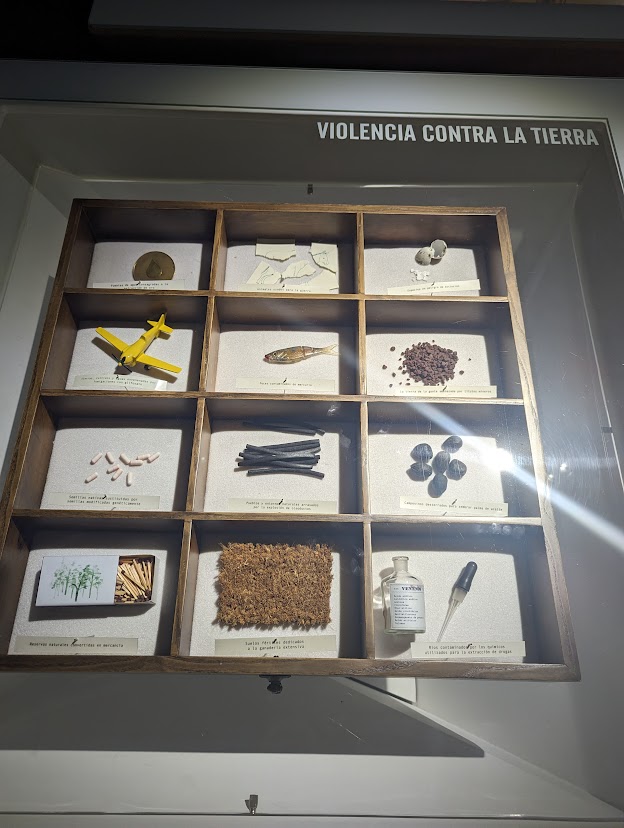
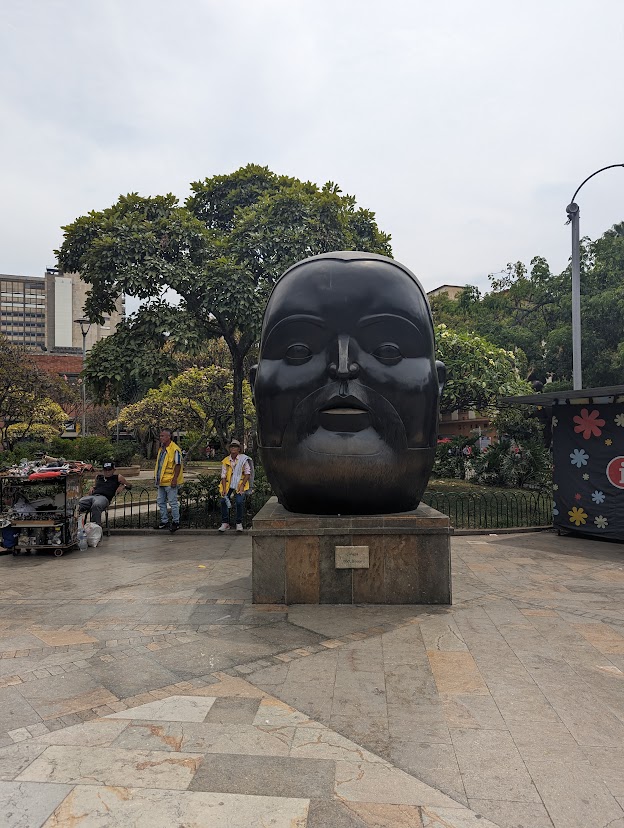
Aside from the Comuna 13 tour, we took a wonder around Plaza Botero, located in the Old Quarter of Medellin. This is a square surrounded by the Museum of Antioquia and the Rafael Uribe Palace of Culture and filled with voluptuous sculptures by the artist Botero. We also visited the Memory House Museum, showing different perspectives on Colombian wars, though this was rather small so didn't take us long to go around.
Evening life
There's a real vibe in Medellin at night especially around El Poblado and the Provenza area, full of lots of bars and restaurants, everyone just chilling outside, along with some clubs for those wanting a proper night out. We bar hopped between a few places but retired early.
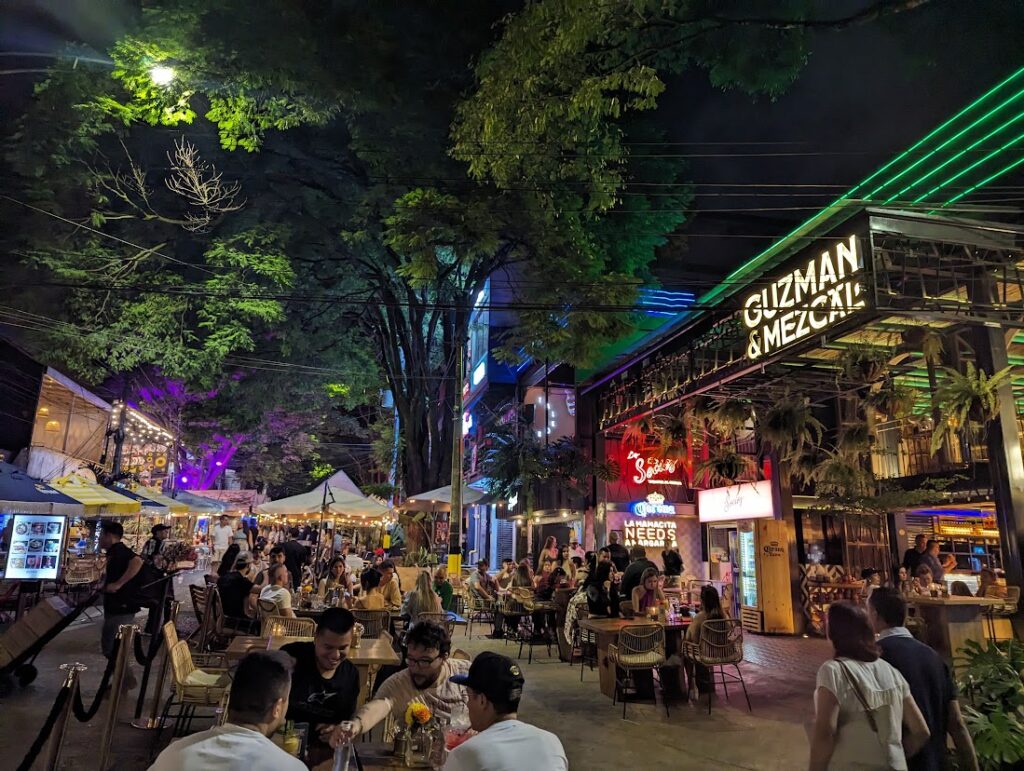
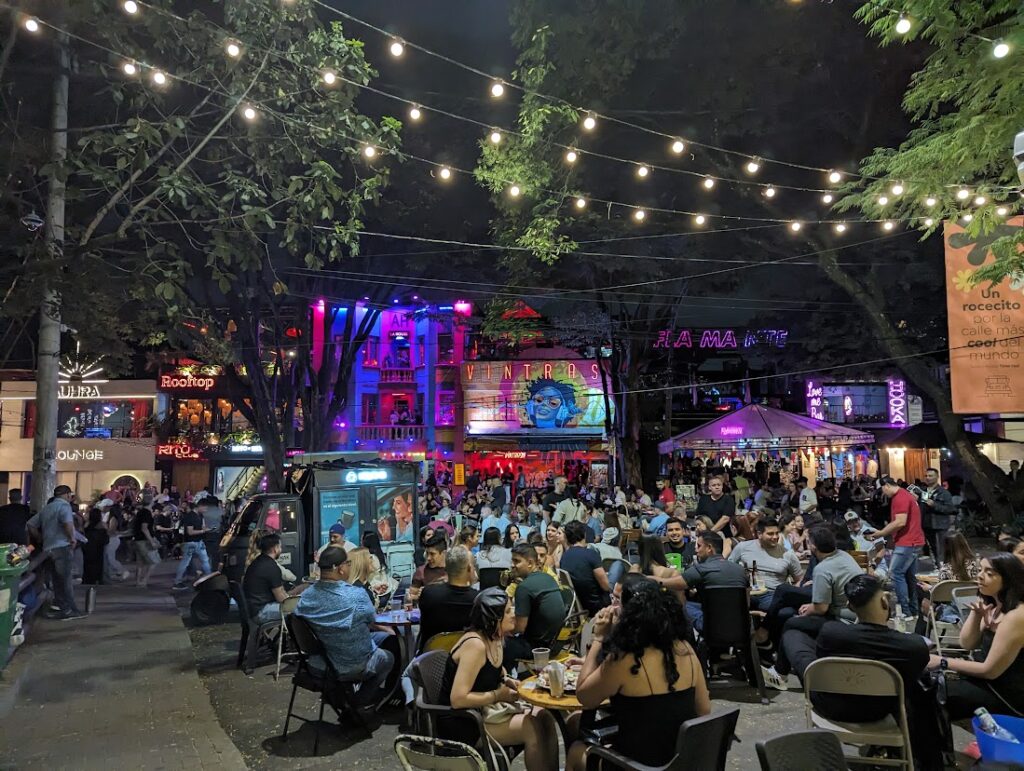
Speaking to other travellers, Medellín seems to be a place people fall in love with, many staying for weeks at a time. For me, I didn’t feel like there was loads to do in terms of typical sightseeing, aside from Comuna 13. But we heard a lot of people stay a while to attend Spanish school and relax.
Salento
My last stop of this trip was Salento and boy did it deliver. My friends and I parted ways in Medellin and I flew to Pereira airport and got a taxi from there to Salento which took around 1 hour. It was totally different to any other part of Colombia, a smaller village town surrounded by the countryside. This place had more of an authentic and local feel. It was much slower paced than both Medellin and Cartagena and had more of a traditional look.

I spent the first couple of nights in Coffee Tree Boutique Hostel, a cute hostel with private rooms. I find when solo travelling and you don't want to share a dorm, hostels with private rooms are a good options. This way, you still get the privacy, whilst also still having the option to meet other travellers.  The hotel overlooked a lovely greenspace with roaming horses and cockerels (not so lovely first thing in the morning).
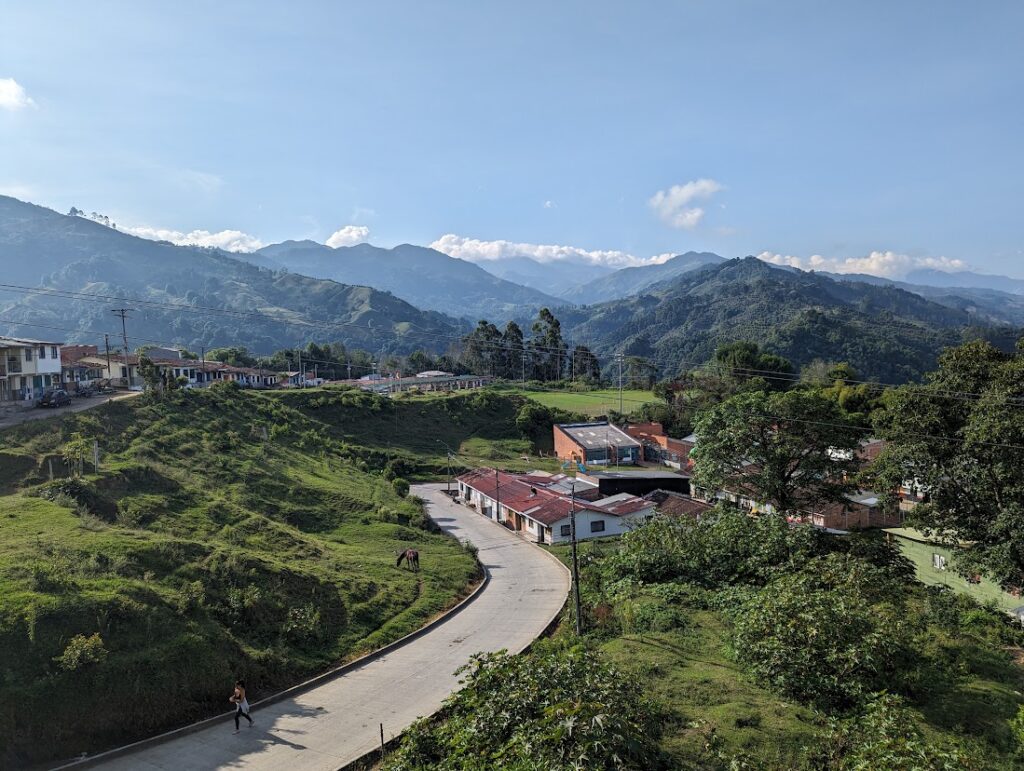
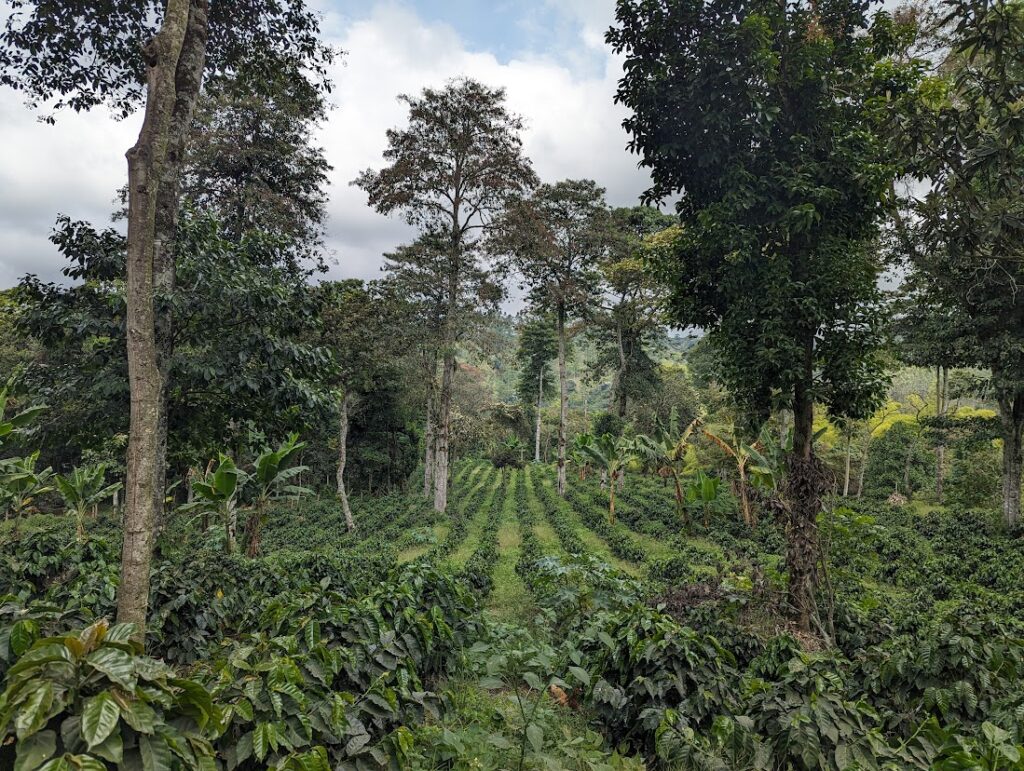
Salento isn’t just about the scenery; it’s also at the heart of Colombia’s coffee region. I visited Finca El Ocaso coffee farm where I got a full insight into the coffee-making process. I'm not a huge coffee fan (more of a latte girlie) so can't say I enjoyed the coffee tasting, but learning about the process and picking out some coffee beans was definitely enjoyable. It was a lovely walk from my hostel to the coffee farm, walking through the countryside and passing some other little coffee farms on the way.
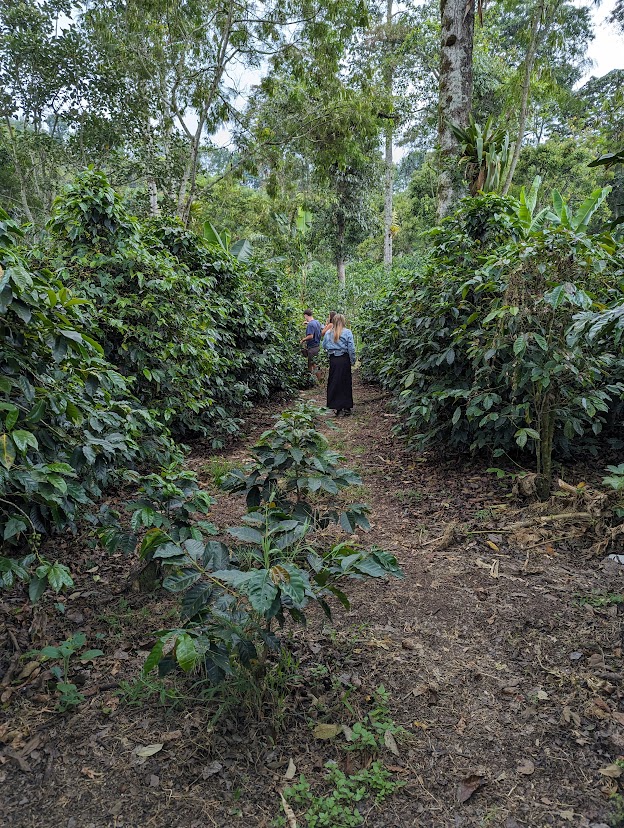
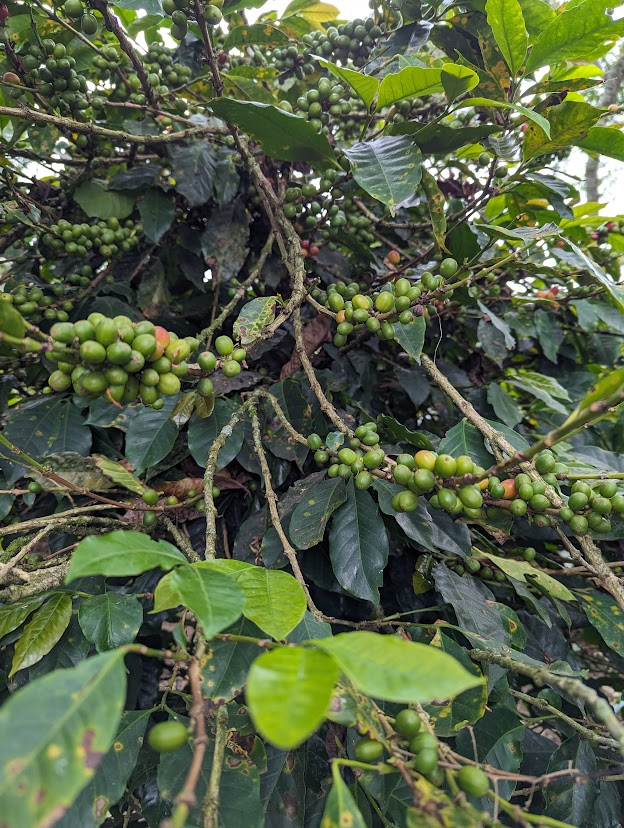
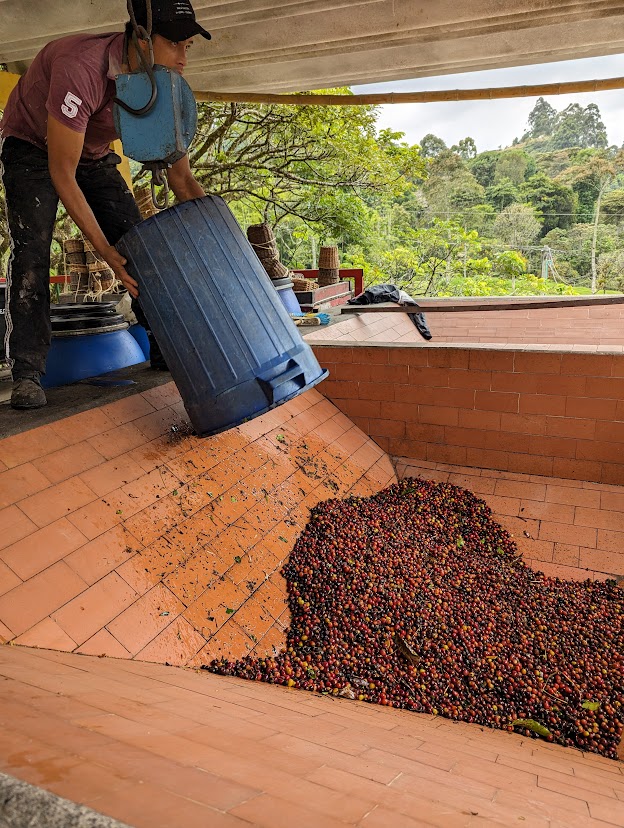
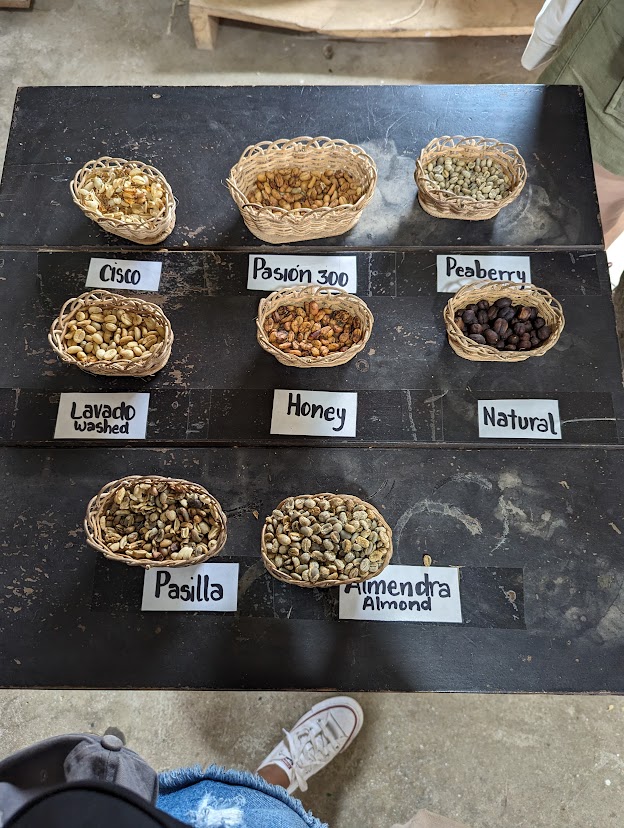
During the daytimes, I also wandered through the colourful main square browsing the little shops and just watching the people passing by. There were some local dances in the square. I also walked up to a viewpoint at the end of Calle Real (lots of stairs involved; because I clearly hadn't had enough of steps). From the top, you get a sweeping view over the surrounding hills.
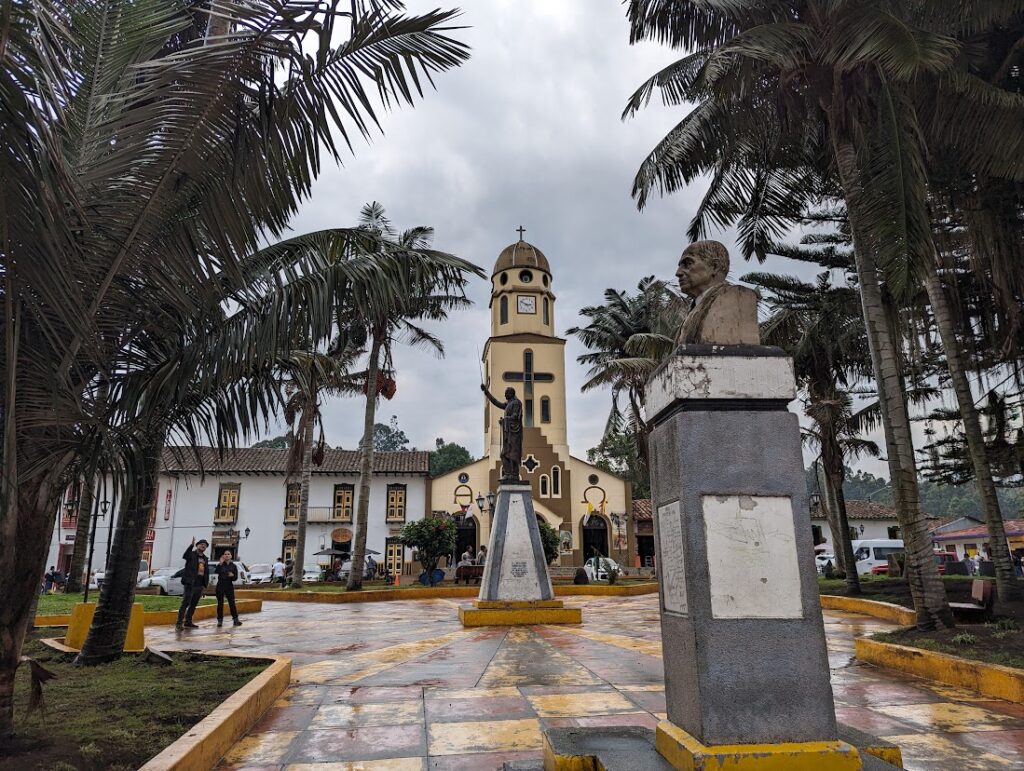
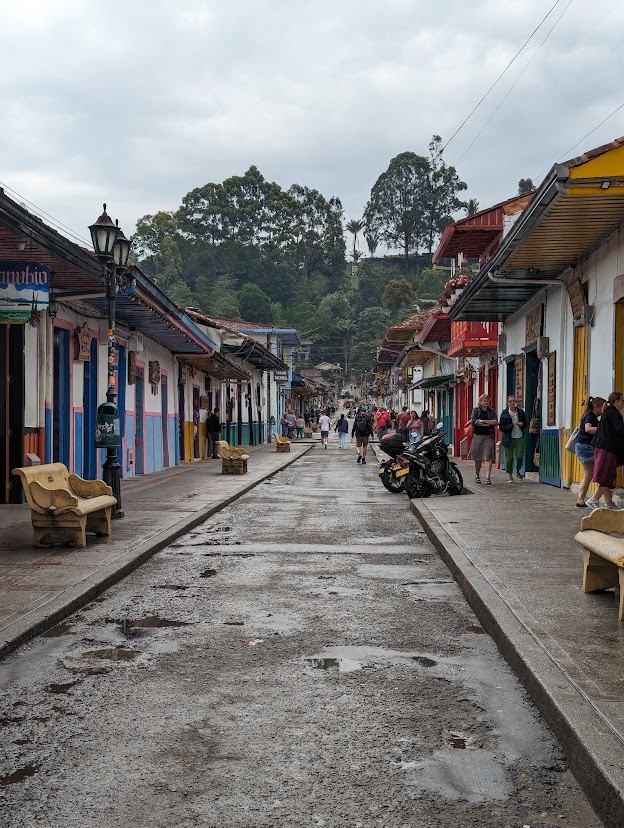
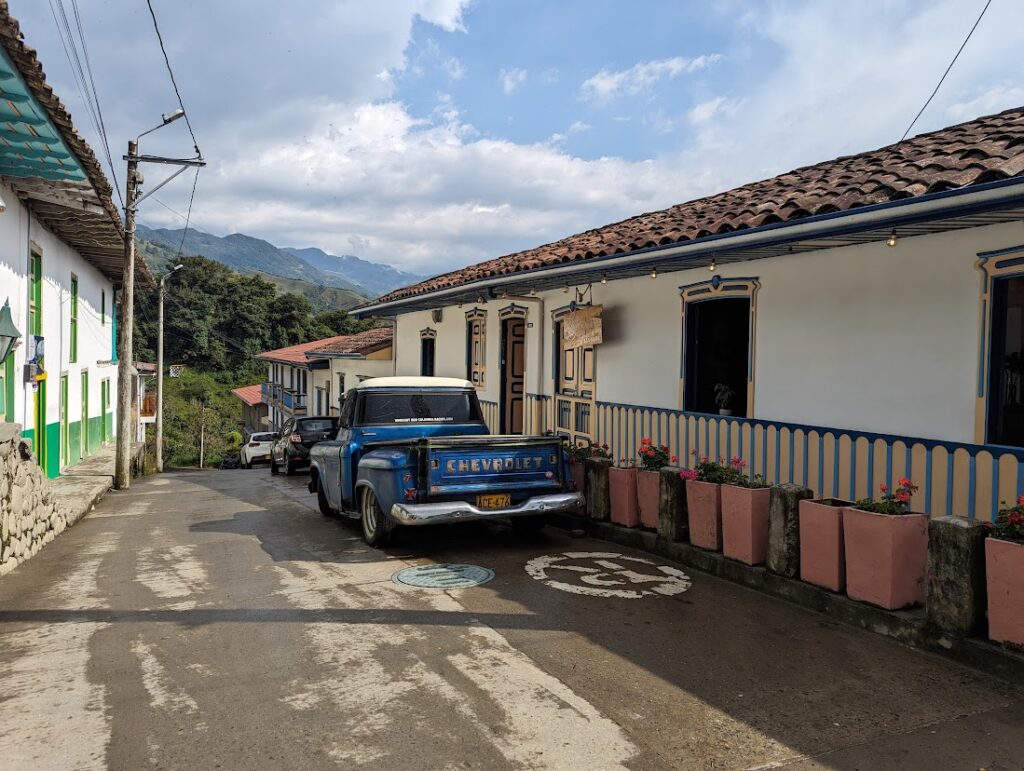
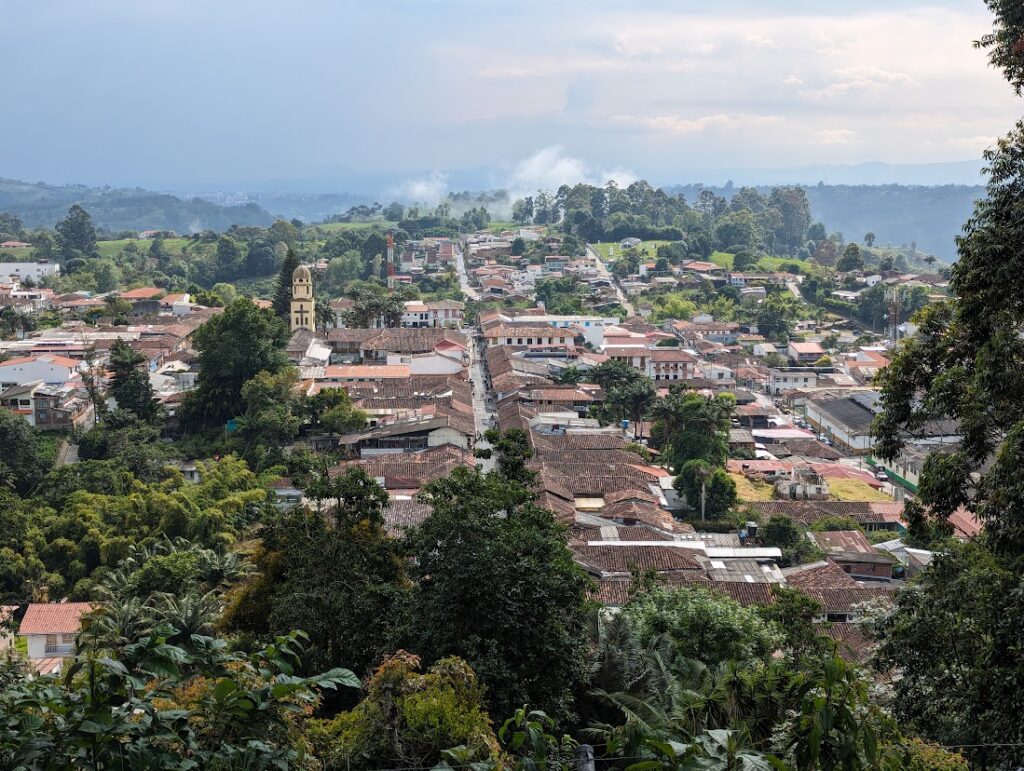
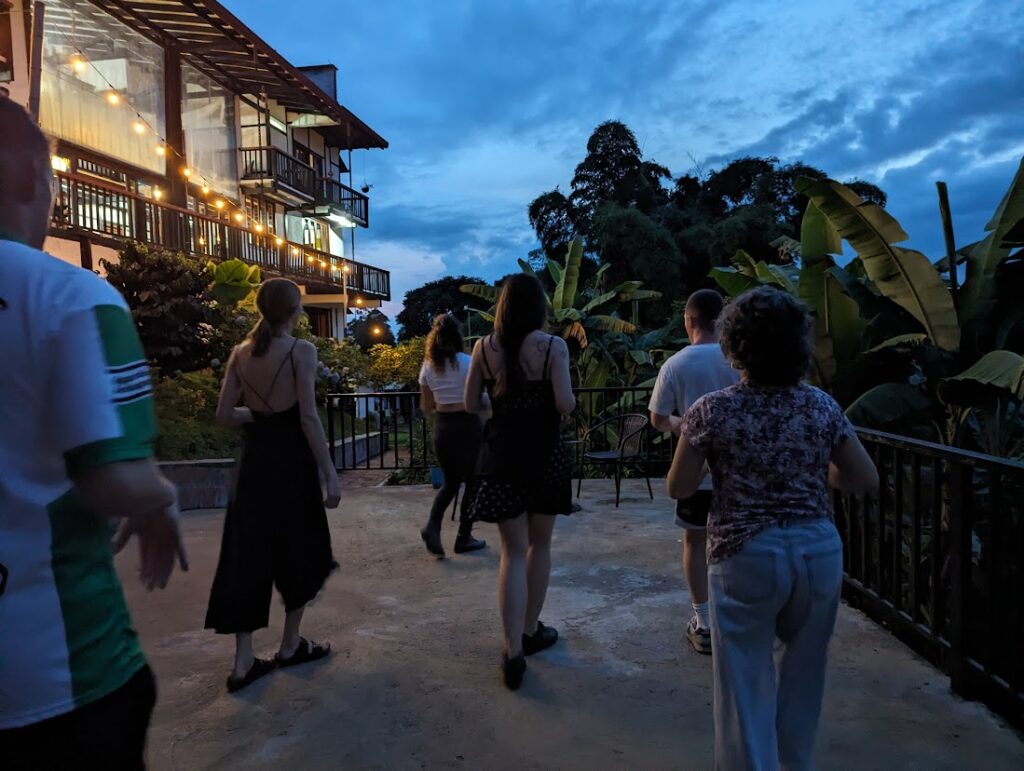
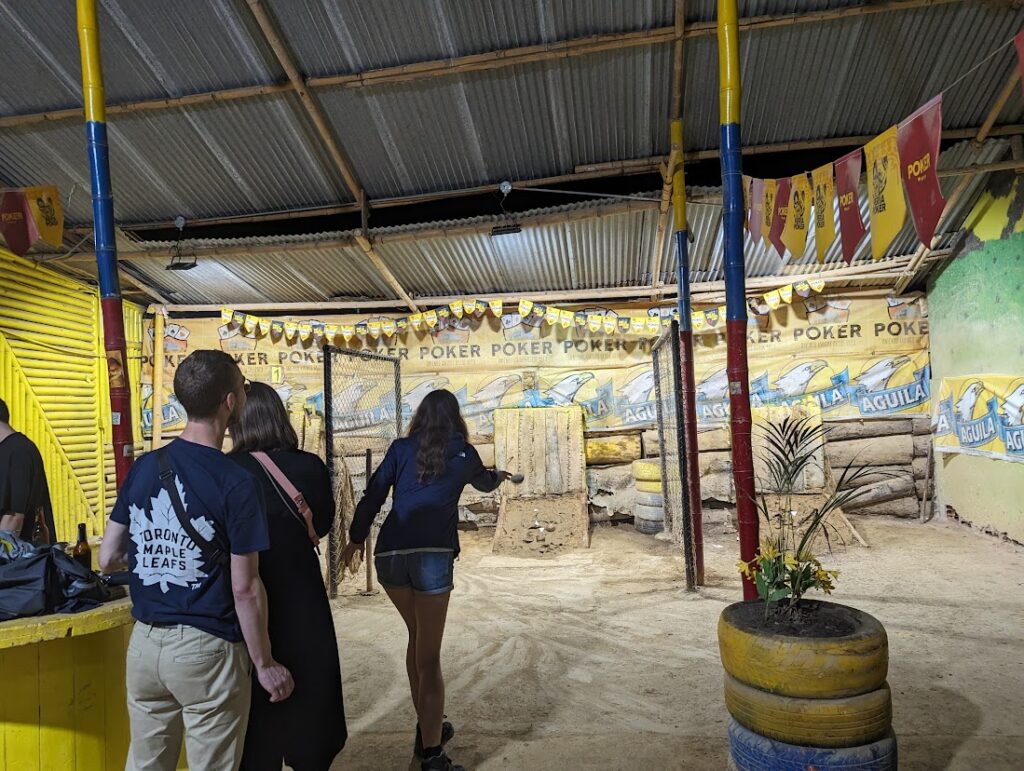
Evenings in Salento are quiet but entertaining. There are a few bars dotted around the square, but what I really enjoyed was experiencing the life of a local. A group of us from the hostel, went to play Tejo, a famous Colombian game, in which you have to throw a puck and hit targets containing gunpowder and get points if they explode. The look and feel of this place, really felt authentic like an olden version of Colombia and it was just as fun watching some of the locals having serious competitions.

The hostel also organised daily social activities, which made it incredibly easy to meet fellow travellers. From salsa lessons and barbecues to other group events, there was always something happening, and these activities ended up being some of the highlights of my time in Salento.
Cocora Valley Hike
I broke up my stay in Salento with one night at Glamping Lumbre before heading out on one of the highlights of the trip: the Cocora Valley hike.

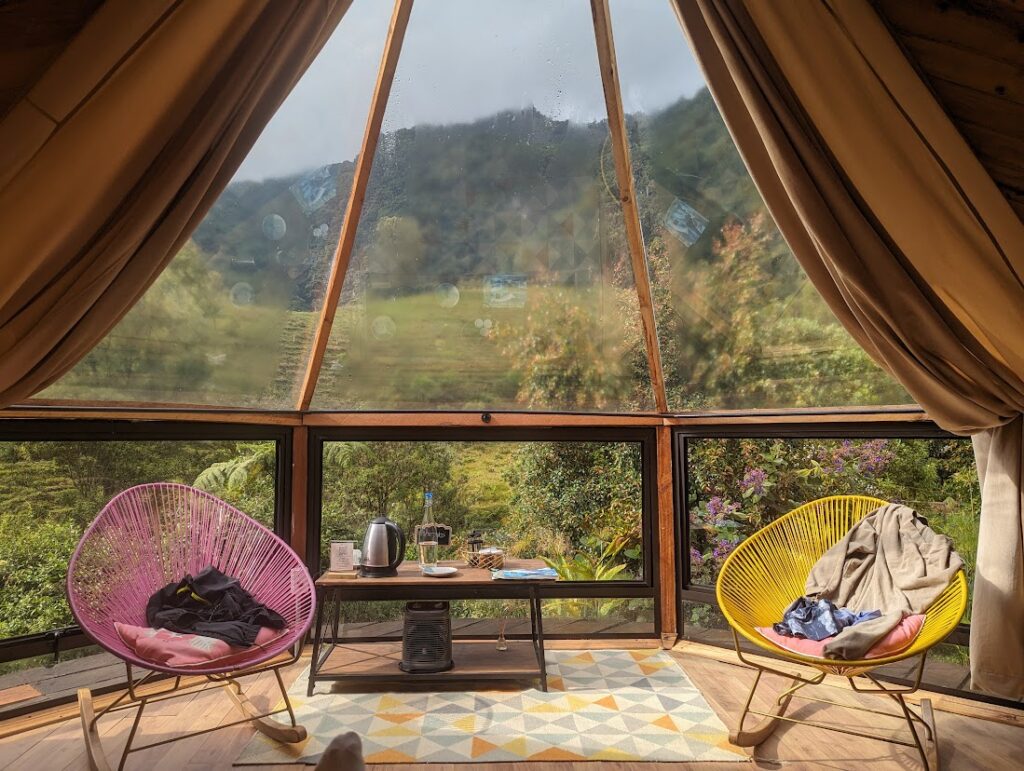
Glamping lumbre offer glamping tents in the middle of the mountains.
Waking up to this view surrounded by nature set the tone perfectly even despite it raining during my stay.
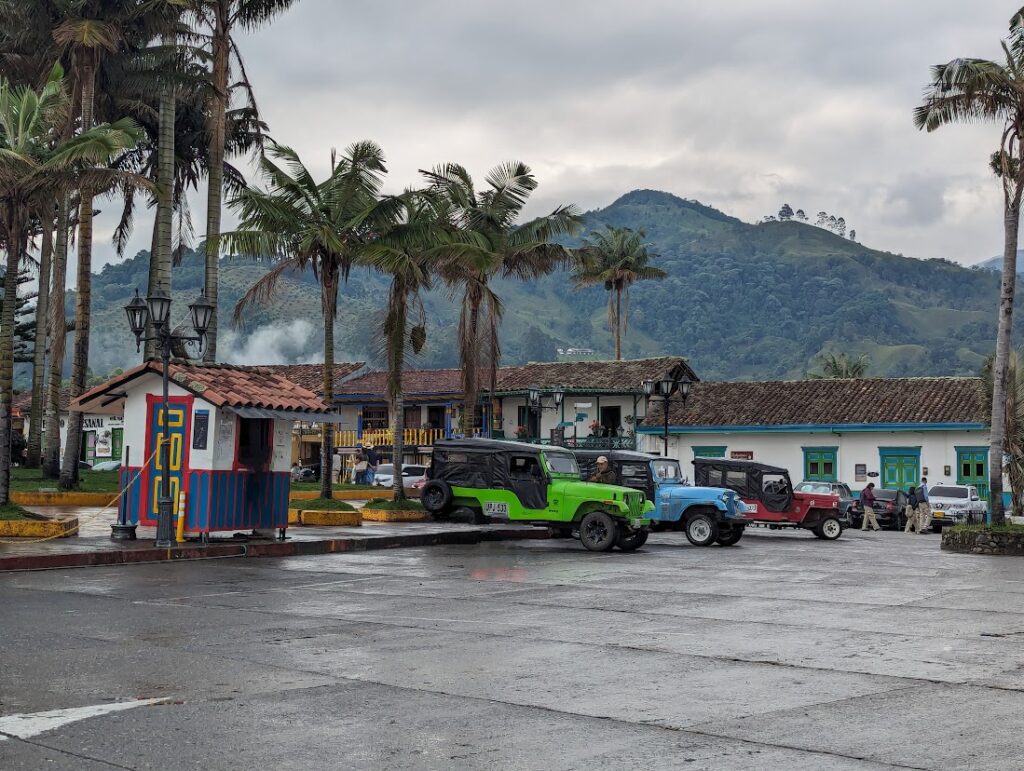
I had an early pick up in one of the famous jeeps to Cocora Valley. The hike itself takes you through lush green landscapes, across wooden bridges, and eventually into the famous valley of wax palm trees, the tallest in the world.

I chose the anti-clockwise route, which meant I didn’t see the giant palms until the very end of the trek which made the grand finale even more rewarding. The trail wound through countryside, a cloud forest and open farmland, with grazing cows, streams and beautiful mountain scenery along the way. In parts, it wasn't clear which way go, and having picked the anticlockwise route, this was also less busy so meant some backtracking to find my way.
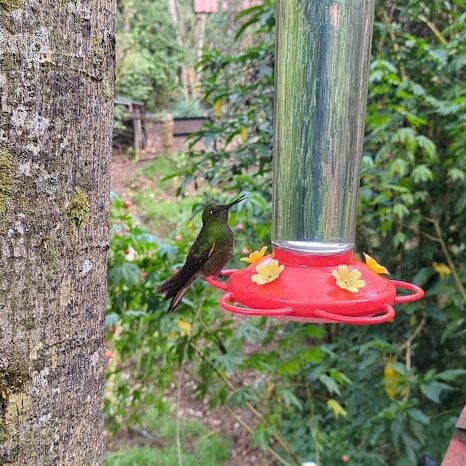
Partway through the walk, I stopped at the Acaime Hummingbird Sanctuary, where dozens of hummingbirds hover around the feeders. It was such an incredible sight watching them up close and a nice pitstop on my long walk to grab a drink. The sanctuary is one of the most popular detours on the route and offers excellent opportunities to observe local birdlife.
At times the weather turned quite windy and cold, particularly on the more exposed sections of the trail. After a few hours of walking, I reached the valley's most famous area, where the towering wax palms rise so high into the sky. It had gotten quite cloudy by this point and a little cold so after a short stop, I decided to carry on to the end point. Near the end (or start, depending on which direction you walk), there is also a landscaped garden with statues and photo spots, providing one last opportunity to soak up the scenery before heading back to Salento.
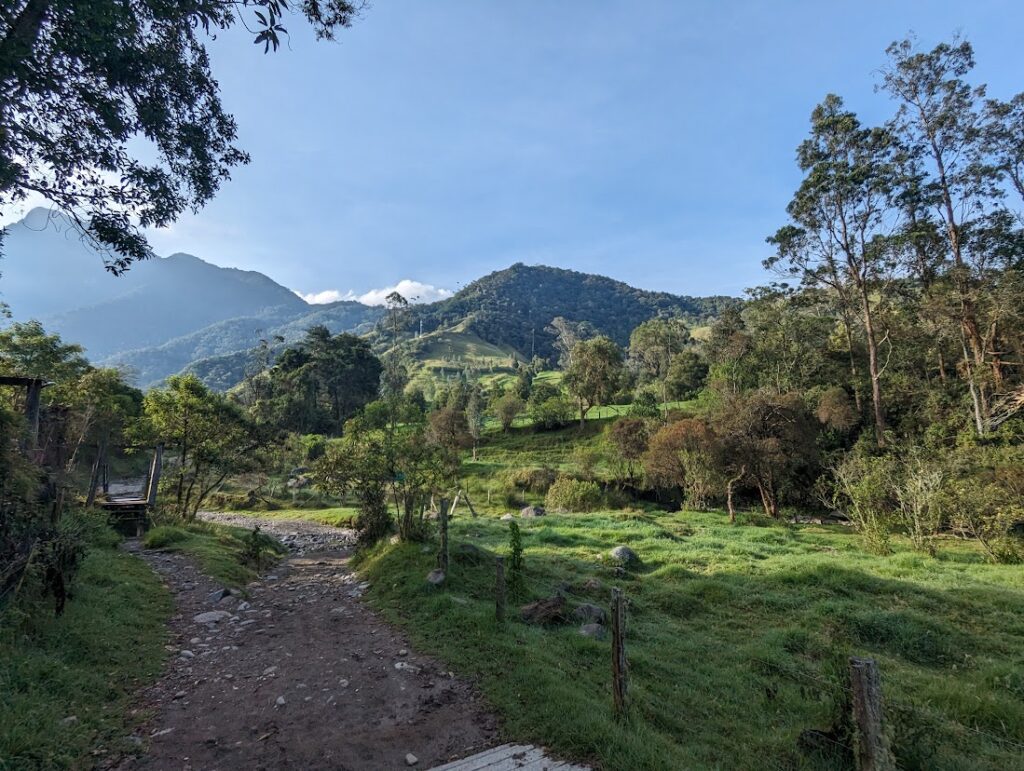
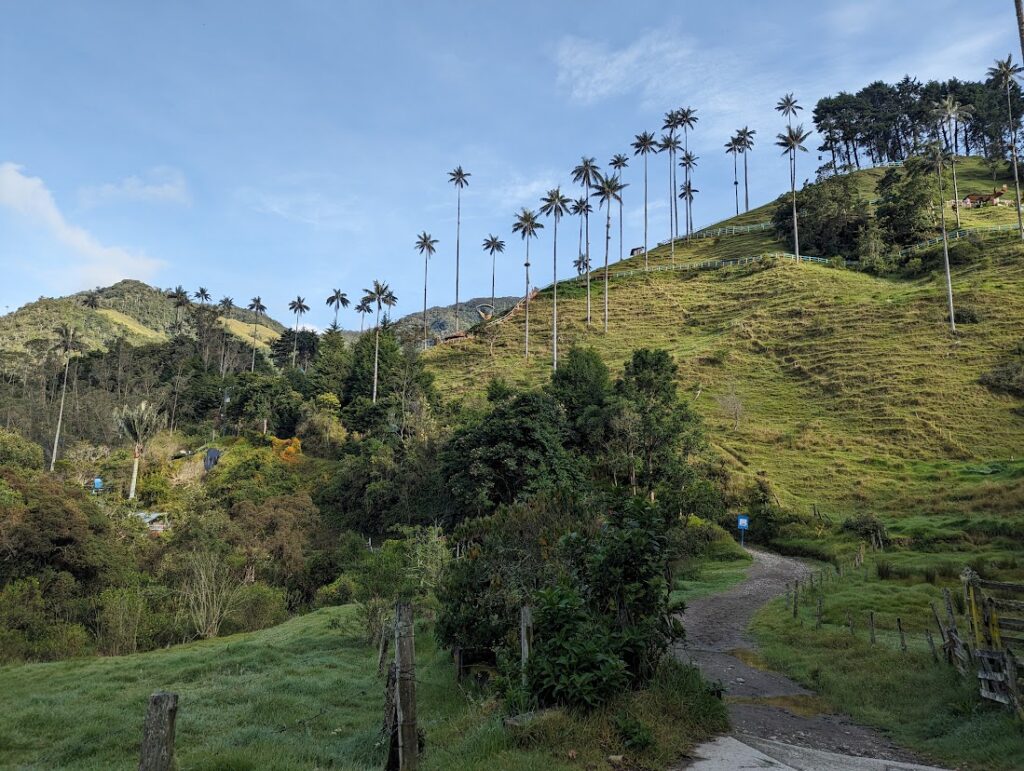
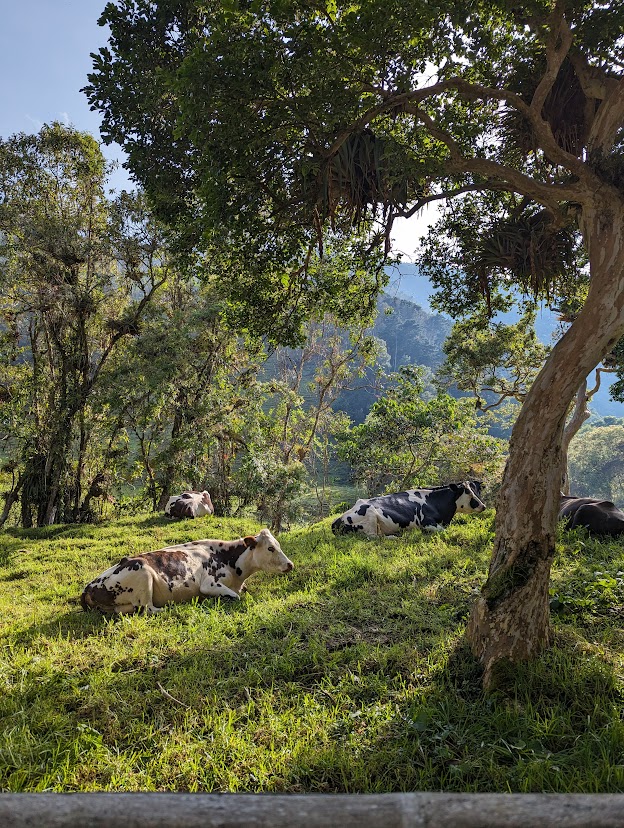
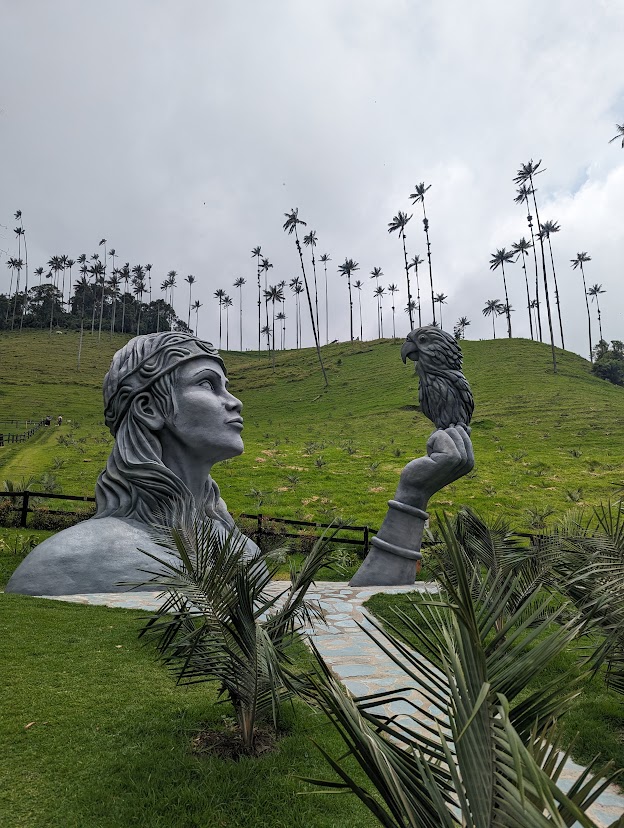
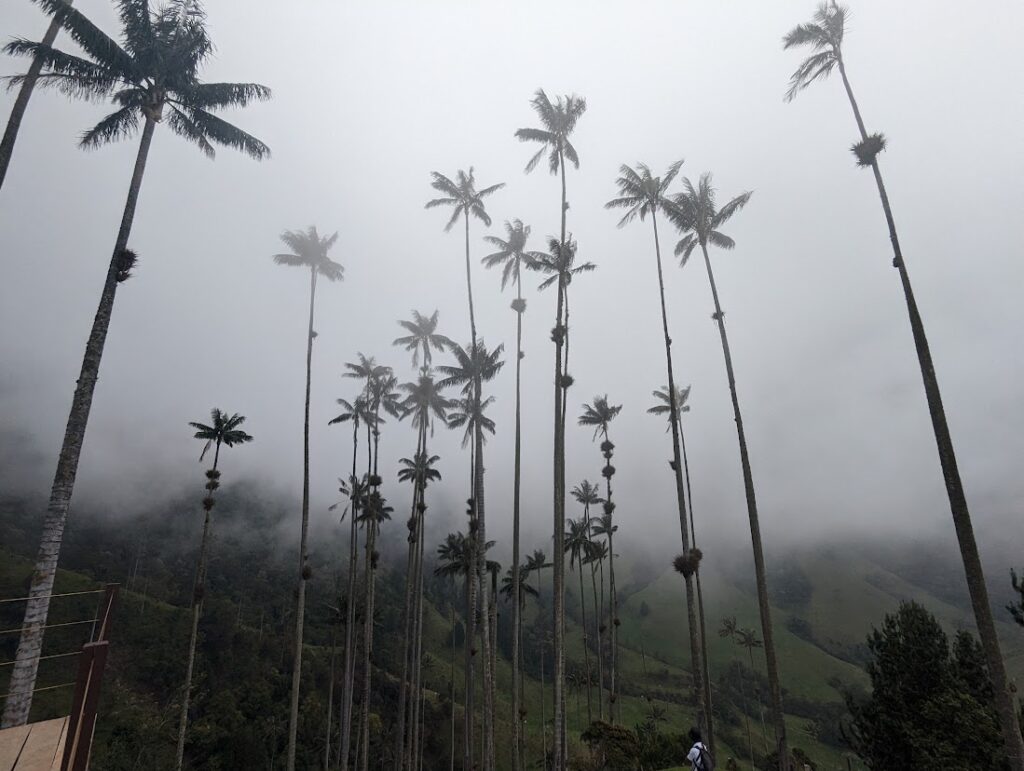
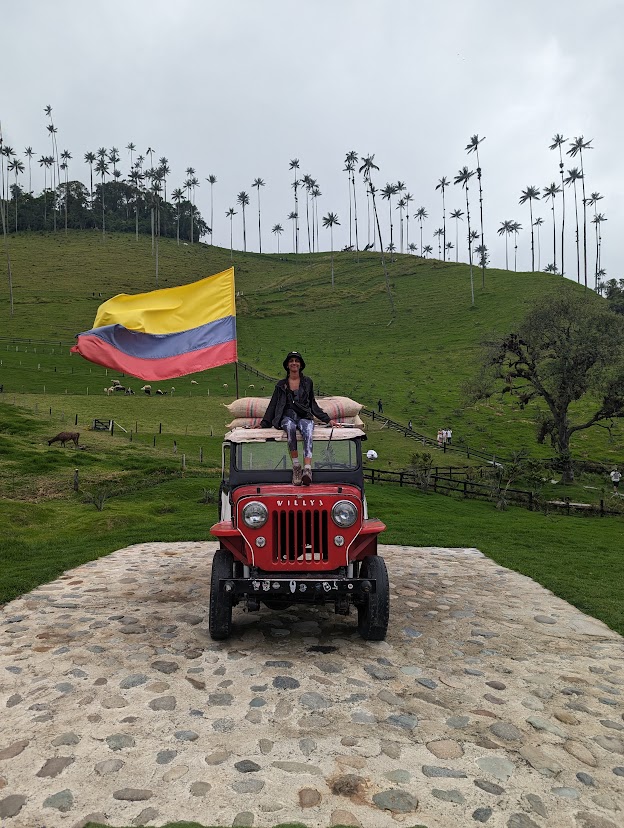
Salento really was the perfect end to my Colombian adventure. A good mix of hiking and experiencing life in a local town. It's a glimpse into a slower, more grounded side of Colombia that's easy to fall in love with.

Note: The weather does change frequently. I experienced unexpected downpours at random times of the day so come prepared.
Overall Thoughts
Sadly after 2.5 weeks, it was time to head home. With lots of Colombia still unvisited, it's a place I would definitely go back to. One of the surprising things about this country, is how safe it felt. Speaking to backpackers, a lot of them said its probably one of the safest countries in South America too so if this is one of your concerns, I'd say as long as you stay on the main travel path, you should have no trouble.

It was fairly easy to get around within each city/town - mostly by foot or taxi. Travelling between regions, was by flight or taxi. If you are traveling for longer or want to do things slightly cheaper then there are a lot of buses that travel between regions, but some of these are quite long and I didn't want to waste time on travelling.